Full legend
The story
In the vicinity of Avenida Arteaga y Salazar 573, within the historical neighborhood of El Contadero, inside the borough of Cuajimalpa de Morelos, modernity seems to halt before the tectonic force of the past. Local chroniclers and neighbors who have inhabited the area for generations recount that the legend of "The Cattle-Counting Frog" only takes shape when the pulse of the city eases. It manifests only during that "strange hour": that brief and uncertain interval at dusk or dawn when the clamor of cars ceases, the cold fog of the mountains descends, and the neighborhood seems to reclaim its ancestral breath to recognize whoever walks upon its stones.
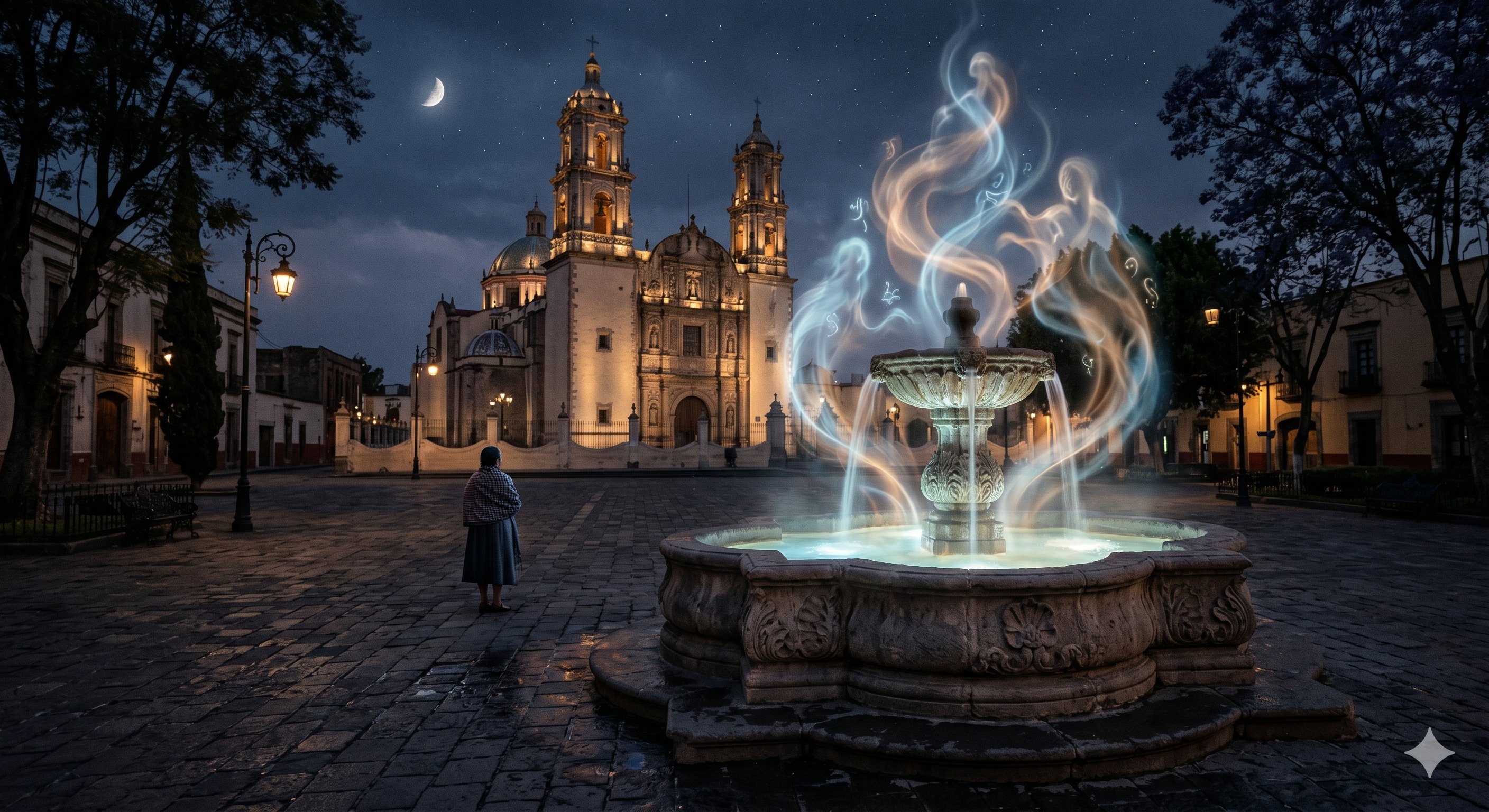
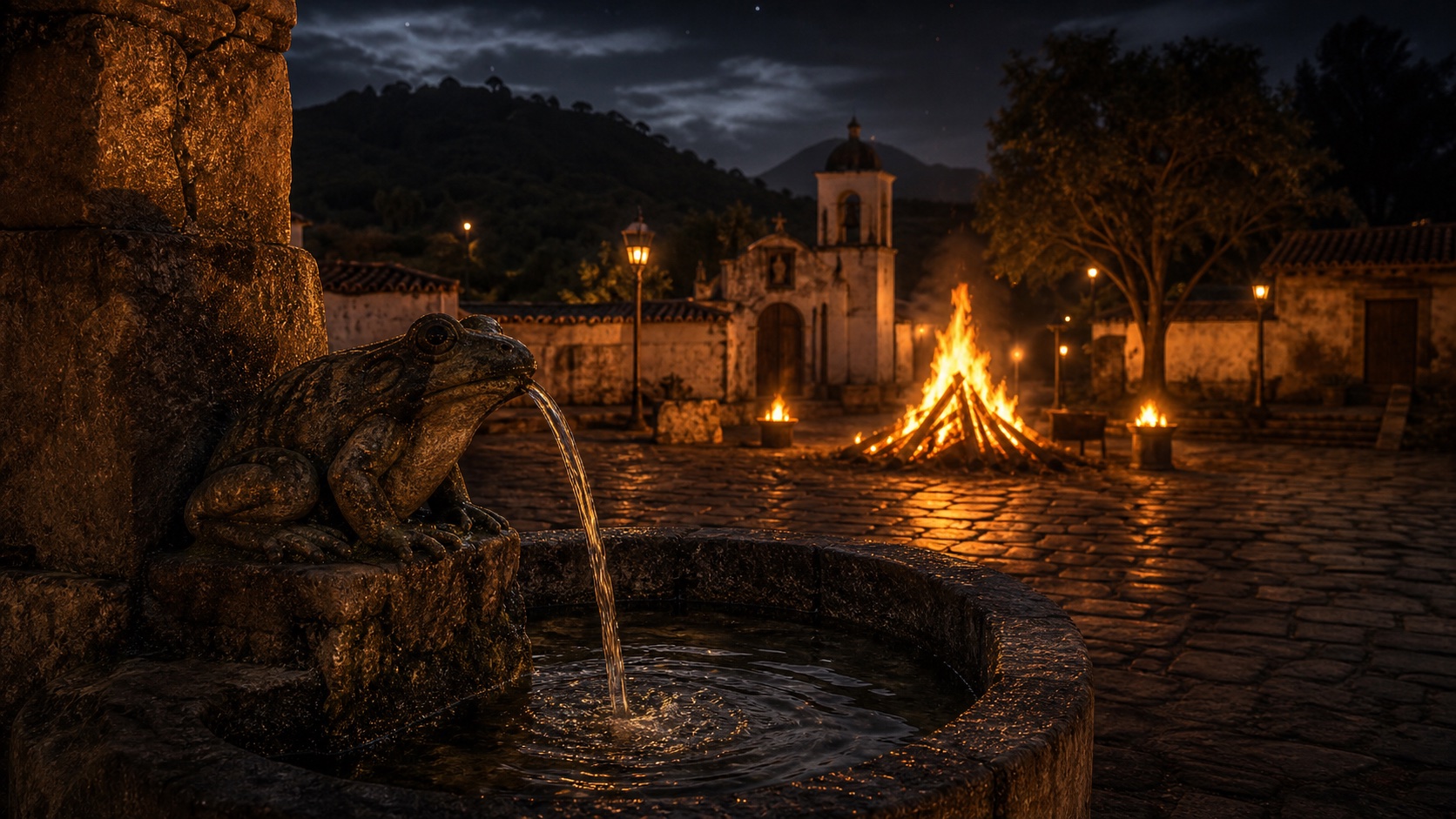
The apparition does not follow the patterns of conventional horror; it does not announce itself with harrowing screams or rattling chains. Its announcement is subtle and purely sensory: it begins with the murmur of water running through invisible irrigation ditches and the sudden, almost imperceptible sound of a croak emanating from an ancient cantera fountain. This sound evolves rhythmically, transforming into the clash of hooves upon the cobblestone, the tinkling of cattle bells, and the murmur of low voices, as if an invisible fountain were counting, one by one, the heads of livestock lost in time. The phenomenon is particularly intense when the December bonfires illuminate the village, as if the street opens a sonorous and olfactory slit toward the ancient sorrows of the Carmelite shepherds.
The elders of El Contadero assure that this presence has no malevolent intentions; its purpose is permanence. It allows itself to be felt to fight oblivion, acting as a sensory bond so that no one ignores what was there before: the area's agricultural and commercial history, its devotions, its warrior duels, and the farming trades marked by the Rule of Saint John the Baptist. Therefore, the legend demands this exact geography; it needs that specific corner, that square, that market, that temple, that hill, or, fundamentally, the cold remains of the adobe boundaries to take form. Those who travel without respect or with arrogance run the risk of hearing, in the murmur of the wind, the name of someone who no longer belongs to this world, reminding them that in Cuajimalpa, those who left never truly left.
Oral memory
Origin of the story
The Little Frog That Counts Cattle grows from a popular reading of El Contadero. The cited source anchors the site and its historical context; the legend uses that ground to tell what the neighborhood imagines, fears, or preserves.
Territory
Territory and atmosphere
The story is set at Avenida Arteaga y Salazar 573. That point is not decorative: the street, plaza, market, church, canal, or hill explains why the apparition is told there and not elsewhere in Cuajimalpa de Morelos.
Cultural reading
Cultural reading
The key to the tale is a fountain that seems to count lost animals when December bonfires light the town. As an urban and neighborhood legend, it turns a territorial detail into warning, memory, or wonder so the local past can keep speaking inside the present city.