Full legend
The story
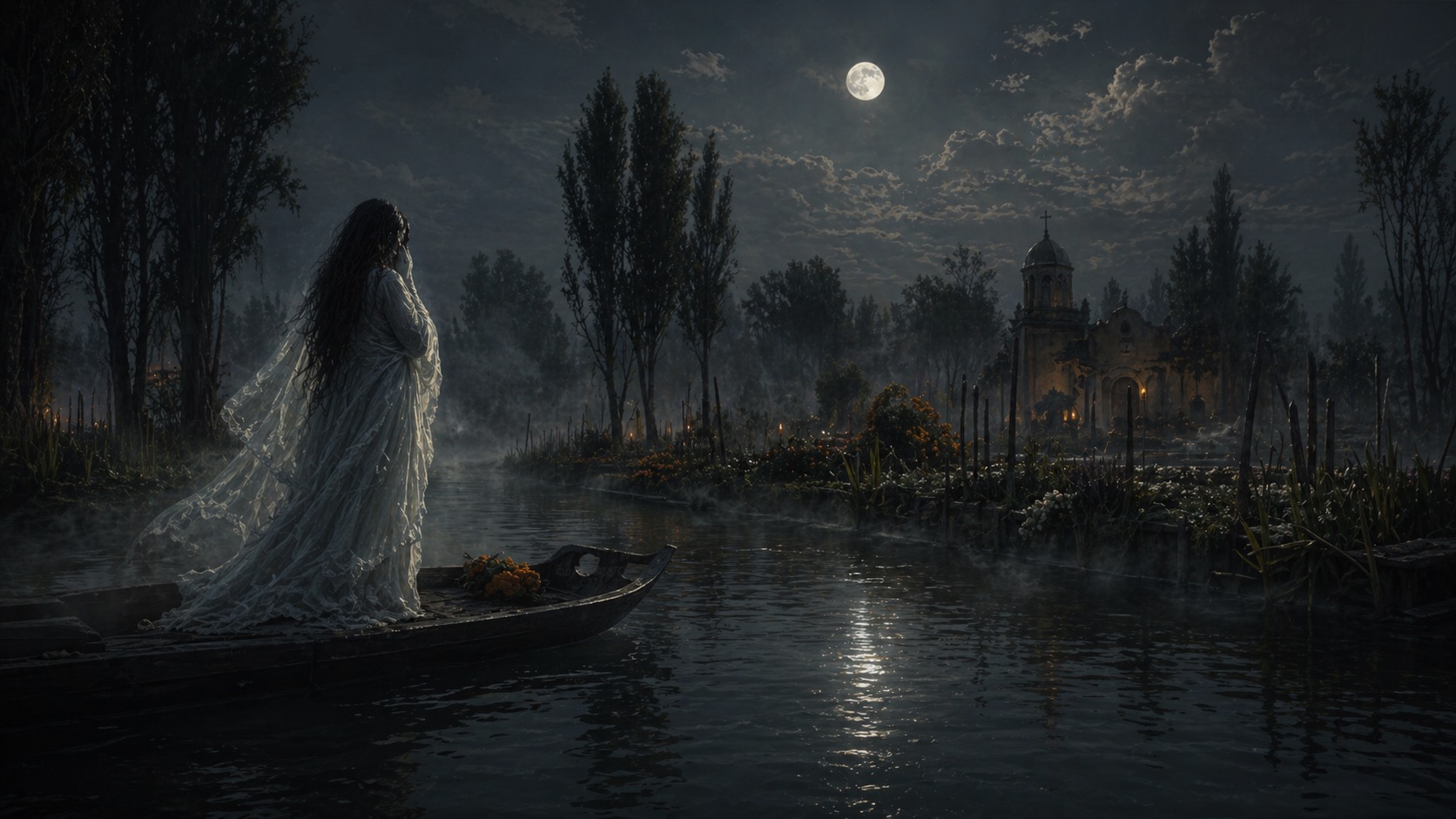
On full-moon nights, a chilling lament cuts across the canals of Xochimilco. It is the Wailing Woman, the mother who drowned her children in despair and now wanders forever searching for them over the black water.
In oral retellings around Xochimilco, the figure matters less as a spectacle than as a presence tied to grief, unfinished departure, and the uneasy feeling that certain losses keep walking long after the event itself has passed.
The Wailing Woman survives because it offers Xochimilco a way to keep mourning visible. The haunting is not only a fear device; it is also a social memory that insists on being encountered again.
Oral memory
Origin of the story
The story is transmitted as a local warning and as a memory of unresolved loss. In Xochimilco, it is told by linking the apparition to a specific absence, a repeated sighting, or a place where grief was never considered finished.
Territory
Territory and atmosphere
Xochimilco, Ciudad de México, sits within Southern canals. That setting matters to the legend because the built environment, the local weather, and the sensory character of the place give the story a believable stage. Sound, mist, architecture, old roads, vegetation, and topography all help explain why this tale continues to feel anchored to a particular landscape rather than floating free of it.
Cultural reading
Cultural reading
Culturally, the legend functions as a way to keep grief in circulation. It turns sorrow into a recognizable presence and gives the community a language for remembering what cannot be repaired.