Full legend
The story
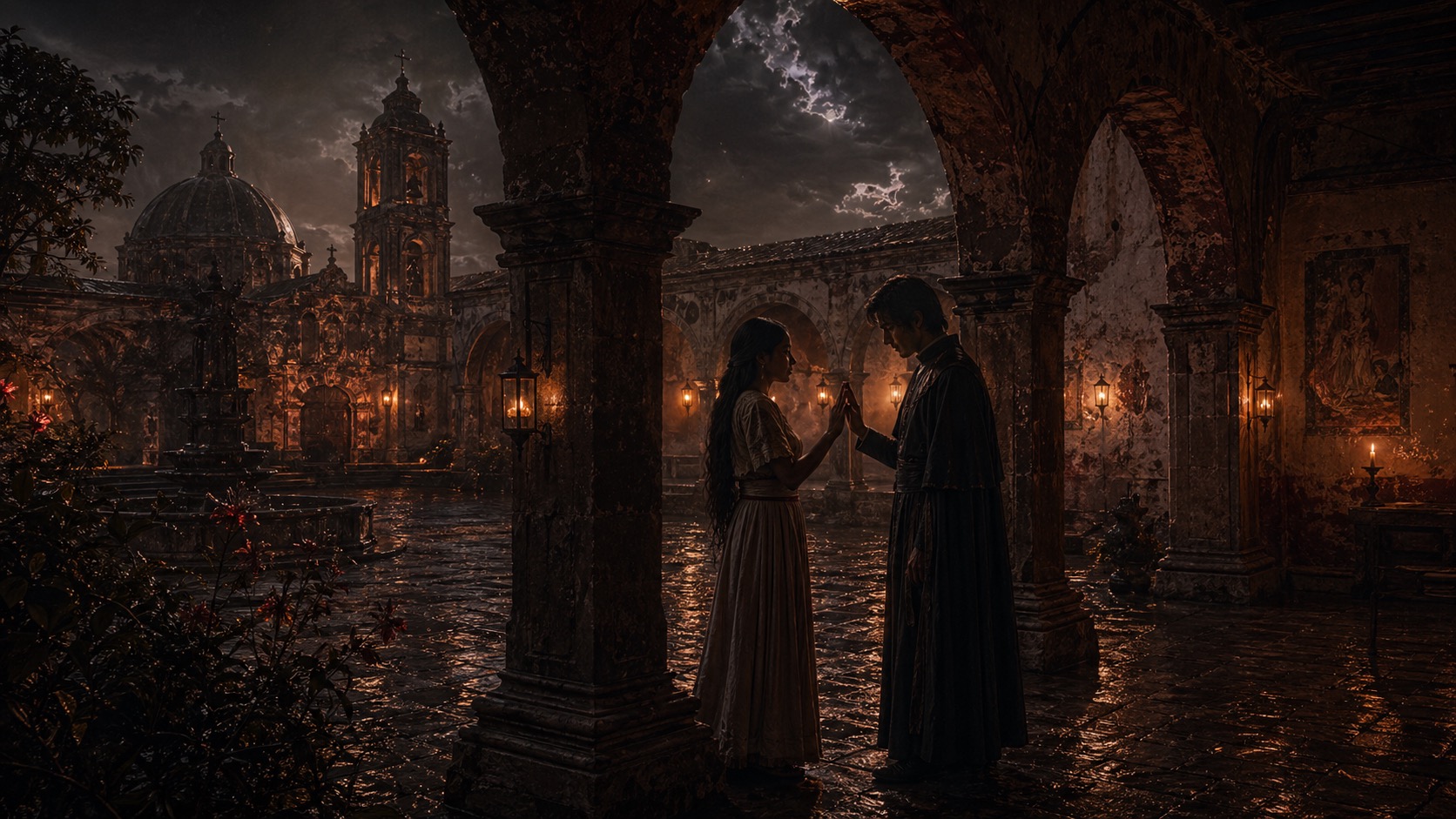
An Indigenous young woman who served near the convent and a mestizo sacristan swore their love beneath the arches after everyone had gone to sleep. They met in secret, leaving small signs between the stones so they could recognize one another without being discovered. The story says that one night someone betrayed them, and punishment fell on both with the severity that obedience and honor carried in those years: she was taken away, he was confined, and they never touched each other again.
Ever since, once night settles in, two shadows appear beneath the corridors of the old convent. They walk toward one another, stop a single step apart, and remain face to face as though the air itself forbade the embrace. Those who claim to have seen them say the sight inspires no horror, only a quiet sorrow, the kind that lasts for centuries because no one wished to admit in time that love, too, could be a form of truth.
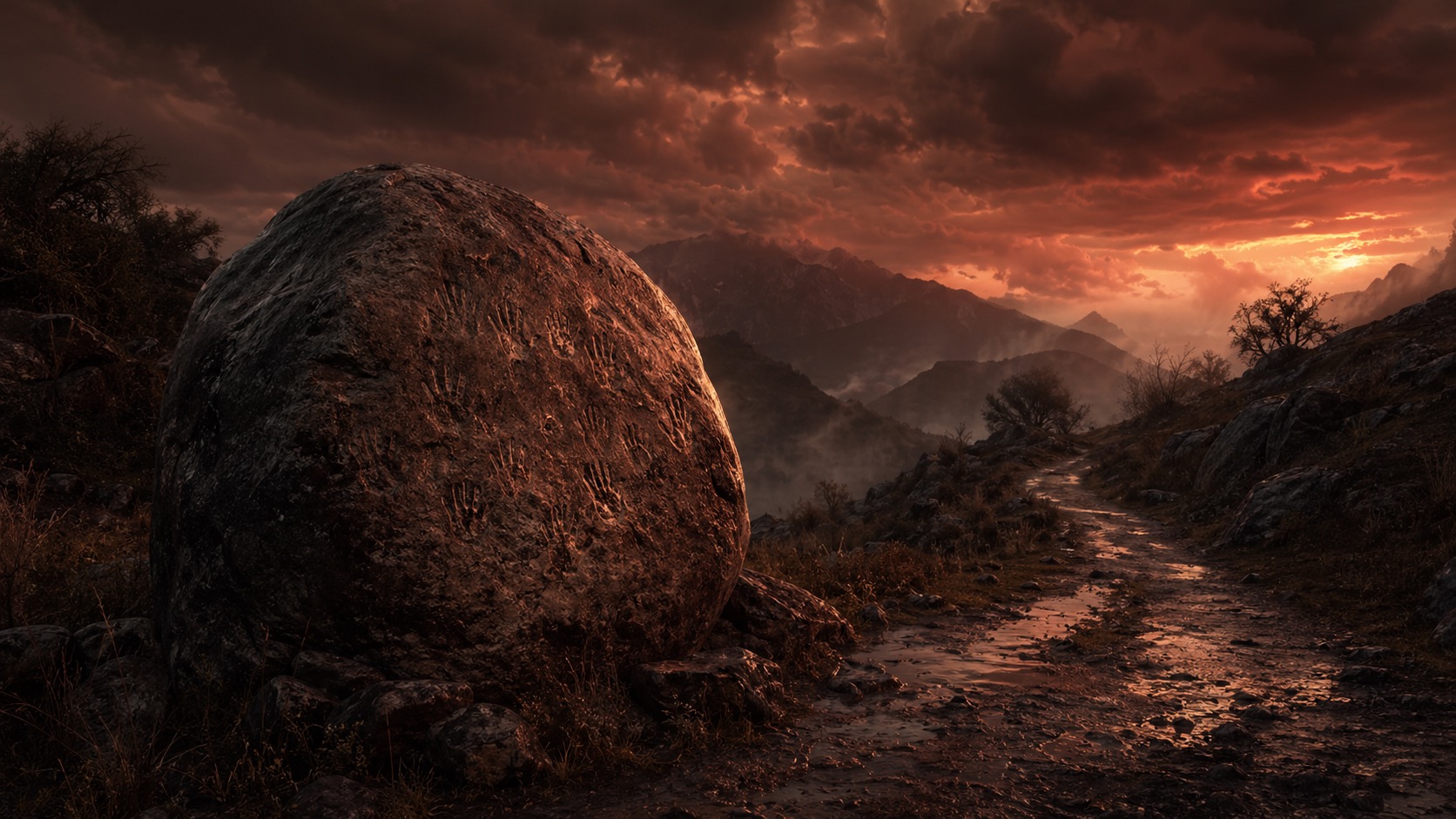
The older women of town used to say that for many years small white stones appeared stacked in one corner of the corridor. They said these were the same signs the lovers used to tell each other that the night was safe. An altar boy tried to sweep them away more than once, and every dawn he found them there again, as if someone insisted on rebuilding a secret language that no longer had anyone to save.
That is why some couples who visit the convent lower their voices or hold hands with unusual seriousness when they pass beneath those arches. The legend promises neither luck nor easy miracles. It merely remembers the cost of denying a love because of blood and hierarchy. In Tlalmanalco people believe the shadows keep seeking one another not because they ignore their fate, but because someone must keep repeating, night after night, the truth they were forbidden to live.
Oral memory
Origin of the story
The Lovers of the Convent gather a tension that colonial history produced in many parts of the country: the emotional bond between people whom the caste system separated and religious institutions watched closely. The local version tells of an Indigenous young woman and a mestizo sacristan who pledged their love beside the arches of the old Franciscan convent, were discovered, and then separated through different but equally definitive punishments. The story says neither of them died. They were simply trapped between the life they had chosen and the life imposed upon them, and that is why their shadows return each night to the arches, near but unable to touch. That detail, impossible closeness, is what has given the story its endurance.
Territory
Territory and atmosphere
The Franciscan convent in Tlalmanalco is one of the oldest and best-preserved in the State of Mexico, with an open courtyard, stone arches, and proportions that still produce the sense of a space separated from ordinary time. The arches of the atrium hold a penumbra that changes by the hour and, at night, creates the mix of shadow and geometry that makes the eye susceptible to seeing silhouettes where there is only architecture. The convent operated for centuries and accumulated the history of many people who lived within it or used it as a reference point in the town's life. In that context, the idea that two of those people remained tied to its arches does not seem impossible.
Cultural reading
Cultural reading
The story of the Lovers of the Convent works with an idea romanticism never fully exhausted: love interrupted by authority does not disappear, it searches for another way to continue. Here, however, the authority is not only sentimental but racial and religious, which gives the story a specific historical weight. The shadows that return without touching are the way popular memory keeps the injustice alive without needing a tribunal. The spectacle of impossible closeness is enough for anyone who sees it to understand the cost of such a prohibition. The convent, once an instrument of separation, becomes the archive where that separation is preserved.