Full legend
The story
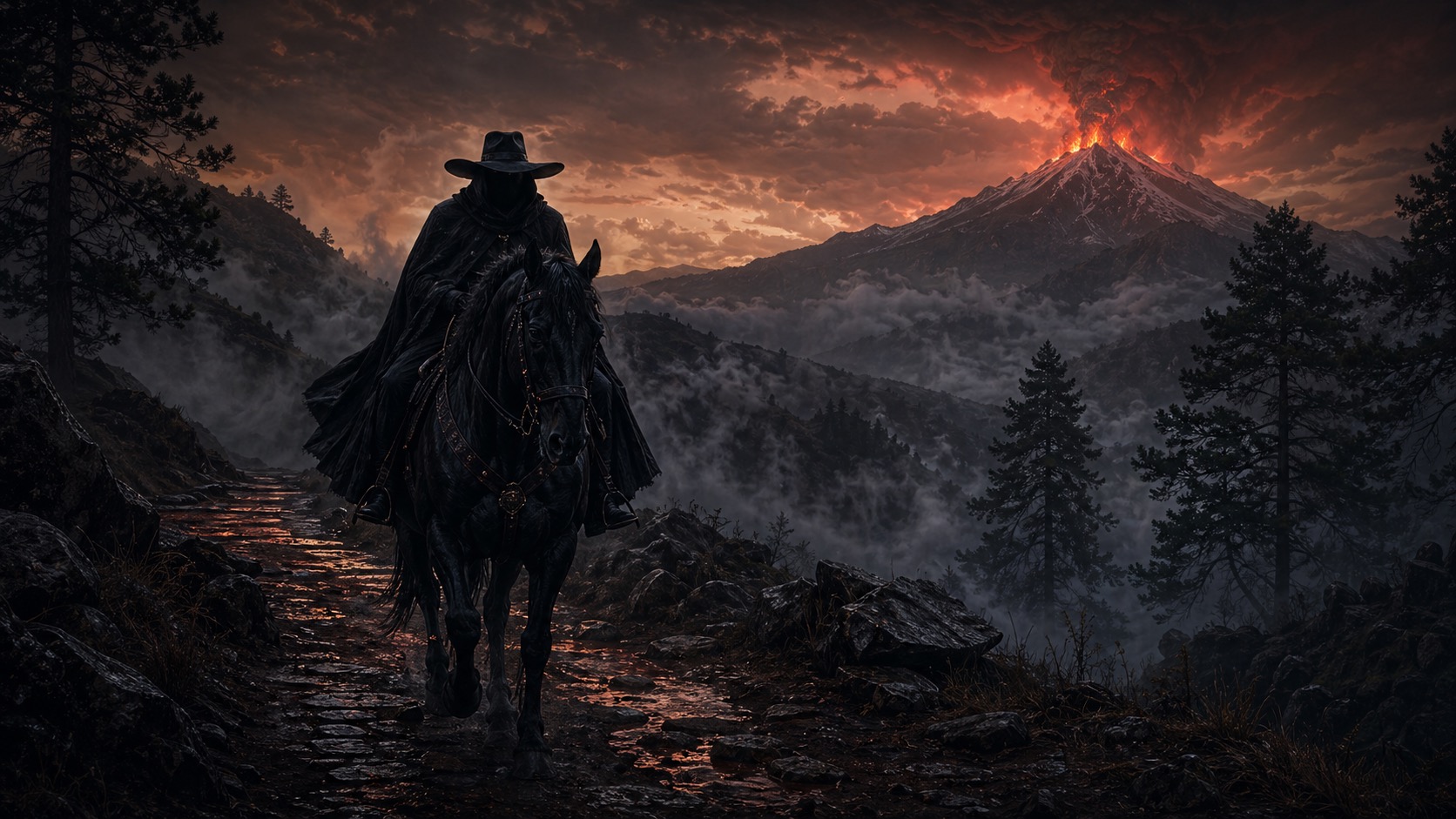
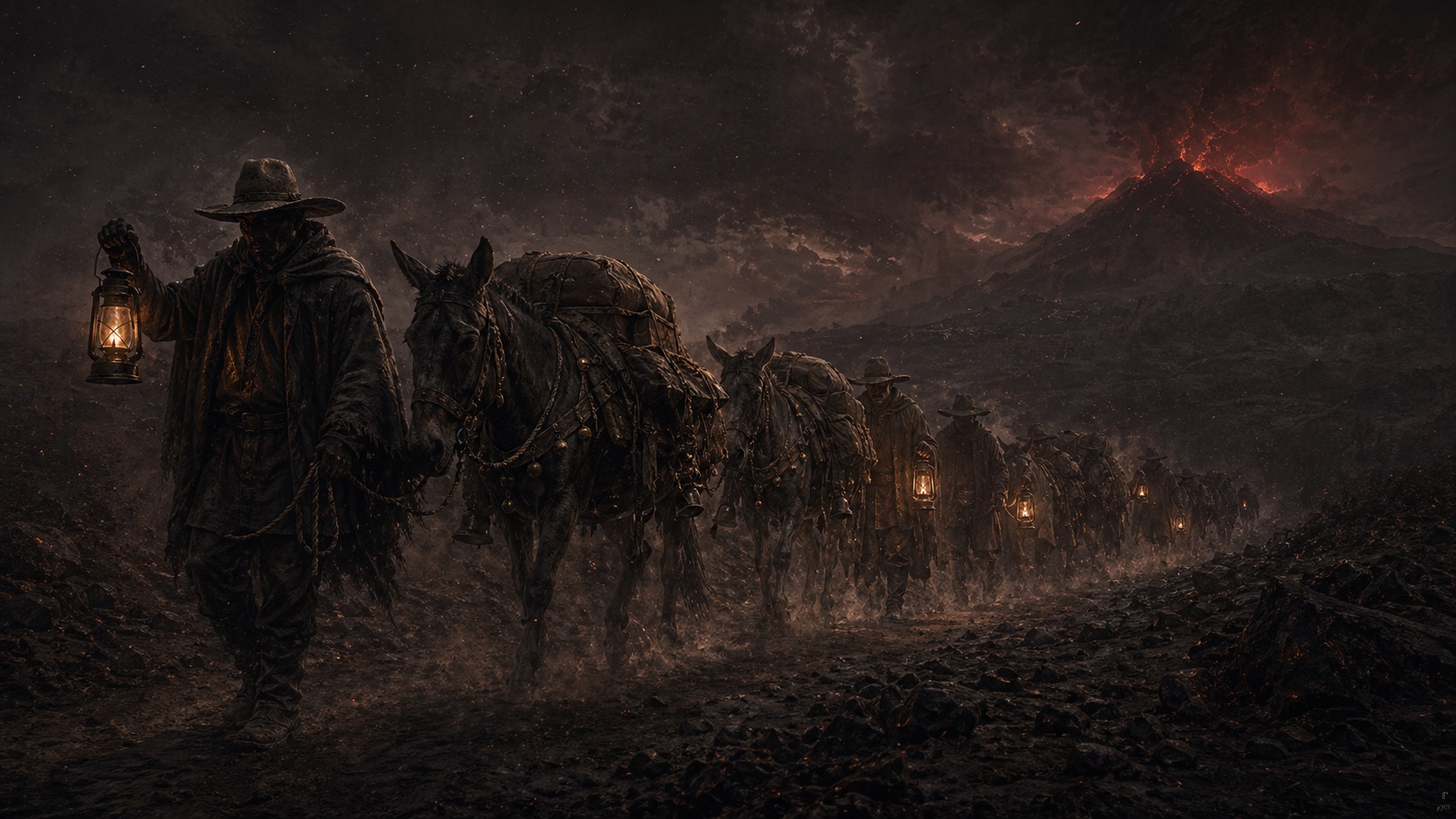
Along the old trade route toward Cuautla, some late-night travelers have heard bells, hooves, and murmurs from a mule train that never fully comes into view. People say they are muleteers killed by an ash storm, condemned to repeat their journey.
Road legends from this region give movement its own tension. Paths, passes, storms, and travelers become part of a geography where the route is never just a route, but a test of memory, caution, and endurance.
The Procession of the Muleteers lasts because it teaches that roads remember. Every curve, pass, and stretch of mist becomes charged with the presence of those who crossed before and were never entirely allowed to leave.
Oral memory
Origin of the story
The story comes from routes repeatedly crossed under difficult conditions: trade roads, mountain passes, old carriage ways, or mist-heavy trails. It survives because movement through this territory has always carried uncertainty along with necessity.
Territory
Territory and atmosphere
Ozumba, Estado de México, sits within Volcano zone. That setting matters to the legend because the built environment, the local weather, and the sensory character of the place give the story a believable stage. Sound, mist, architecture, old roads, vegetation, and topography all help explain why this tale continues to feel anchored to a particular landscape rather than floating free of it.
Cultural reading
Cultural reading
Its cultural role is to store the risks of movement in memorable form. By attaching warning to riders, roads, or processions, the legend teaches how a route should be entered, crossed, and remembered.