Full legend
The story
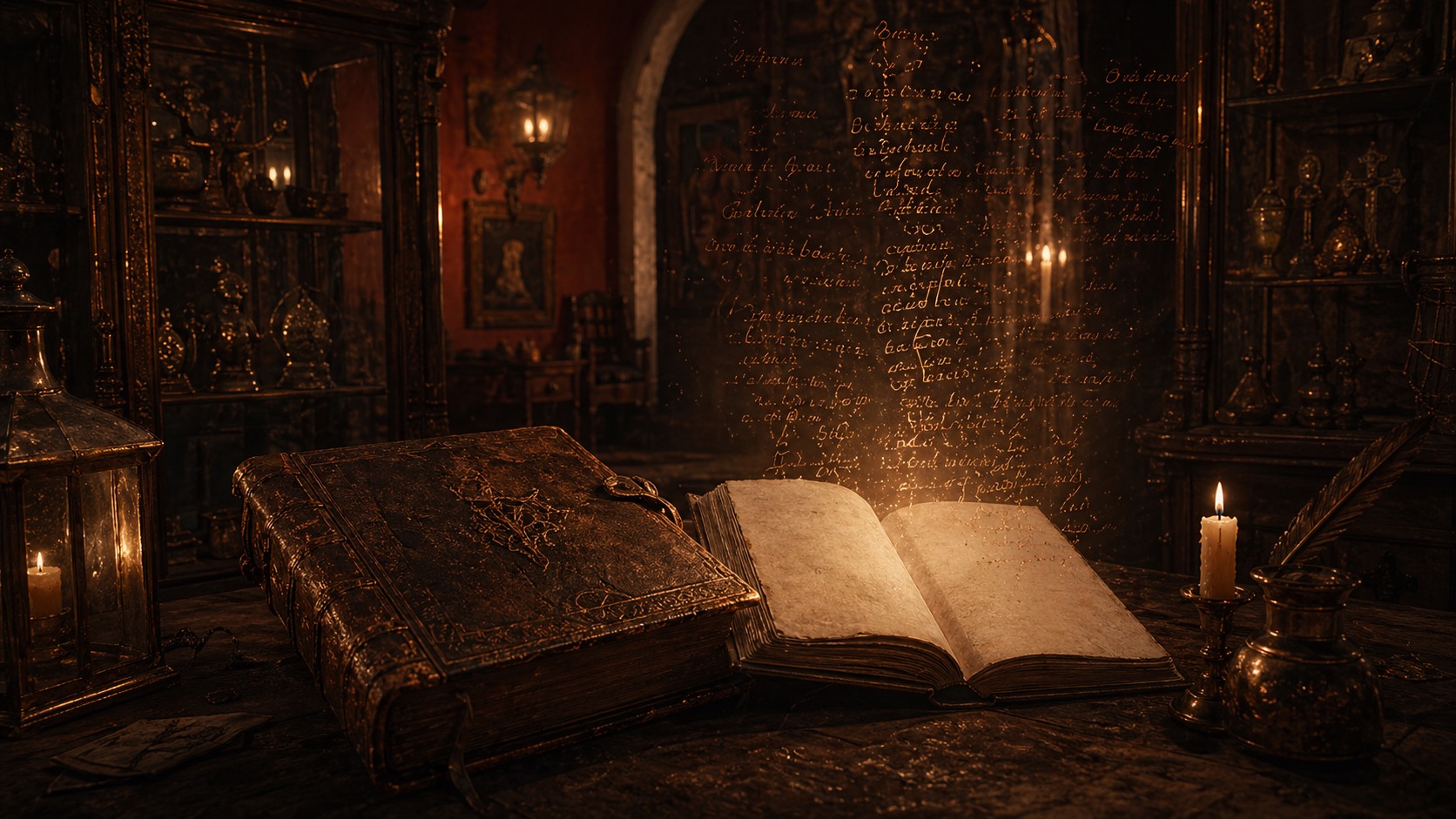
A leather-bound volume is said to appear and disappear among the vitrines and old rooms of Nepantla. Whoever opens it finds a blank page on which their own secrets begin to write themselves slowly into view.
The legend binds architecture, writing, archives, and learned memory to the sense that certain places preserve more than documents: they preserve gestures, presences, and unfinished ways of reading the past.
The Closed Book of Nepantla remains effective because it lets memory behave like a living force. What was written, taught, hidden, or contemplated in Nepantla is imagined as something that never fully stopped happening.
Oral memory
Origin of the story
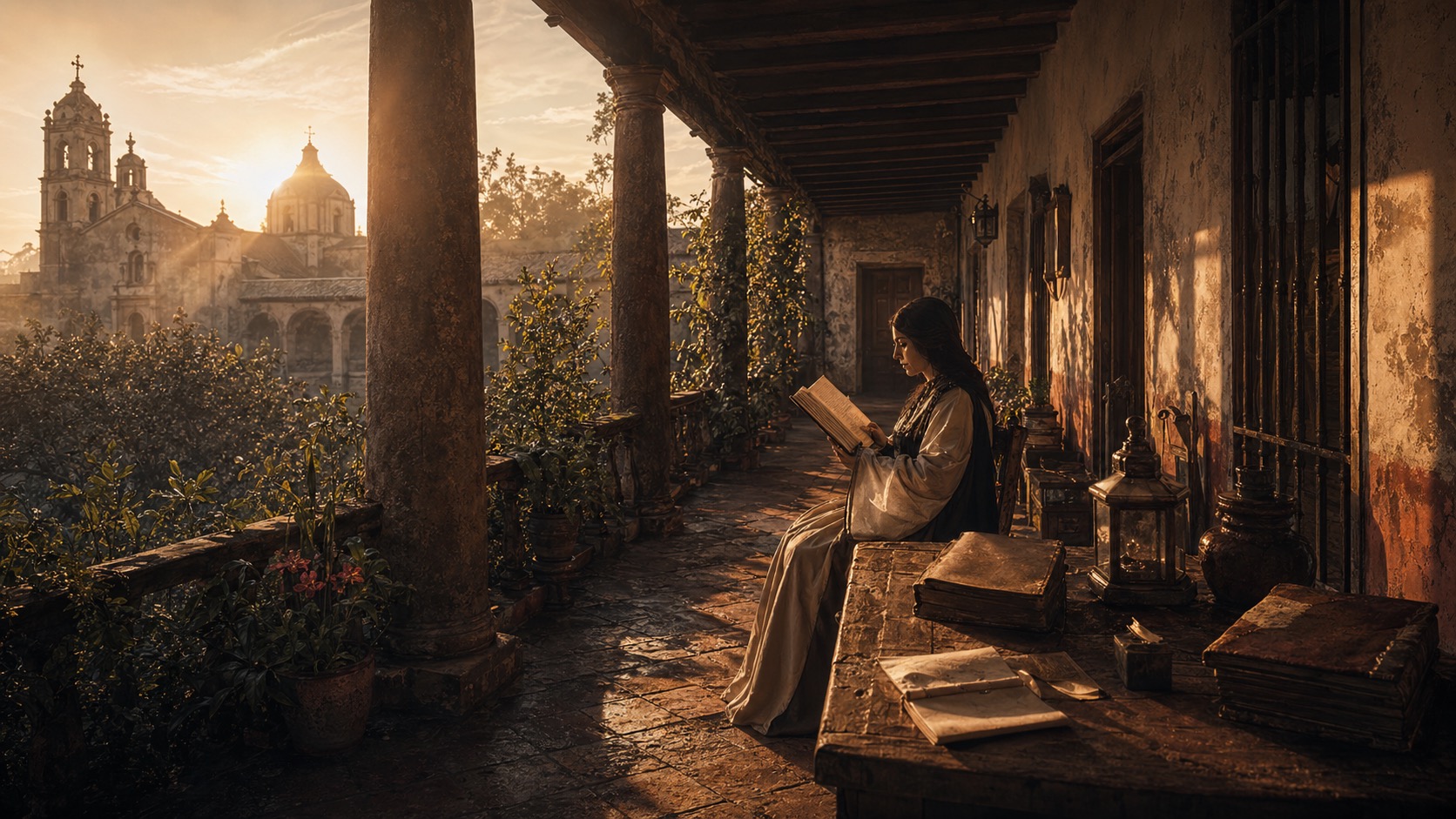
Its origin belongs to the world of archives, convents, learning, and remembered voices. In Nepantla, the legend persists because written culture and oral imagination are not opposites but overlapping ways of keeping a place inhabited.
Territory
Territory and atmosphere
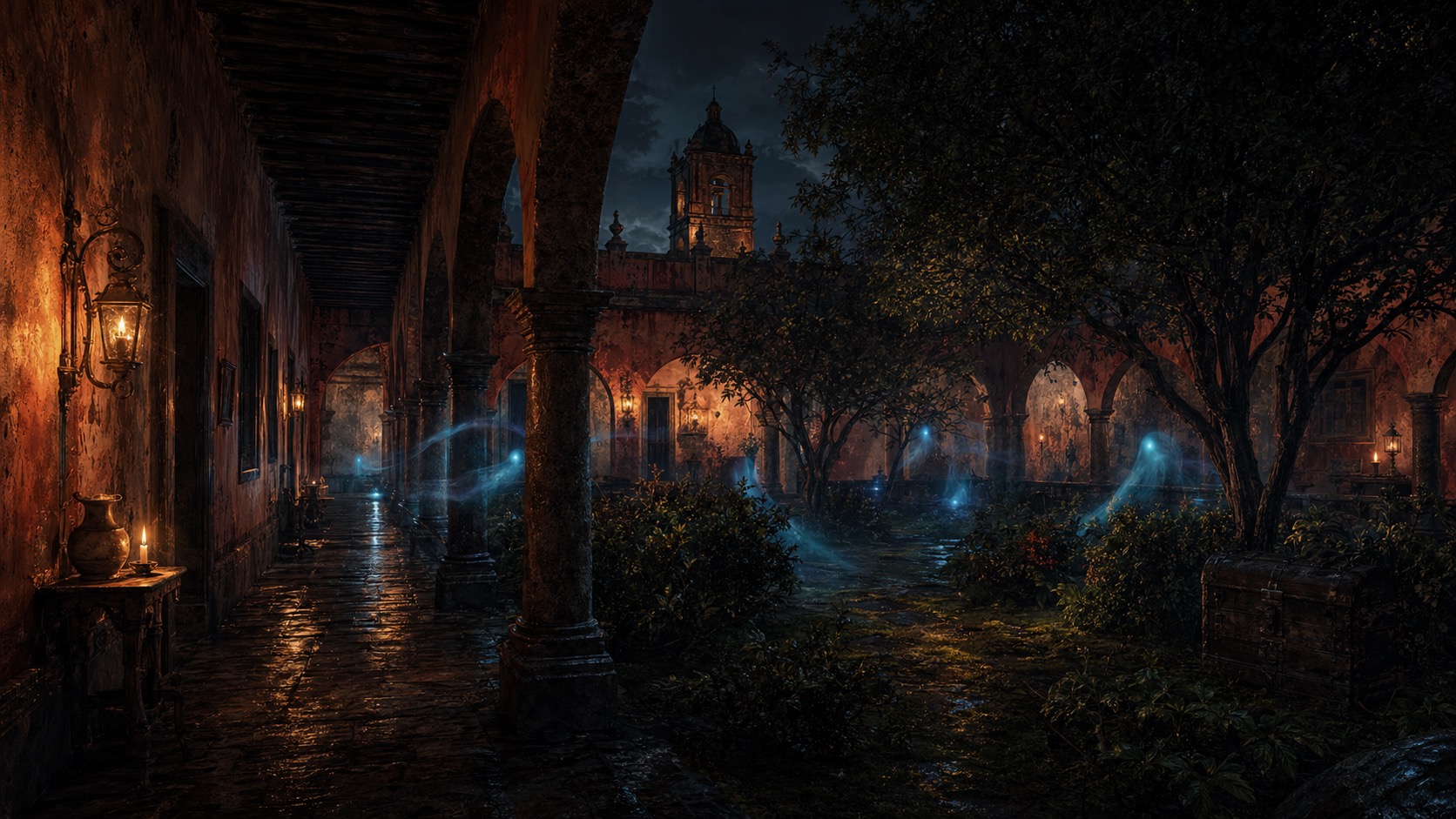
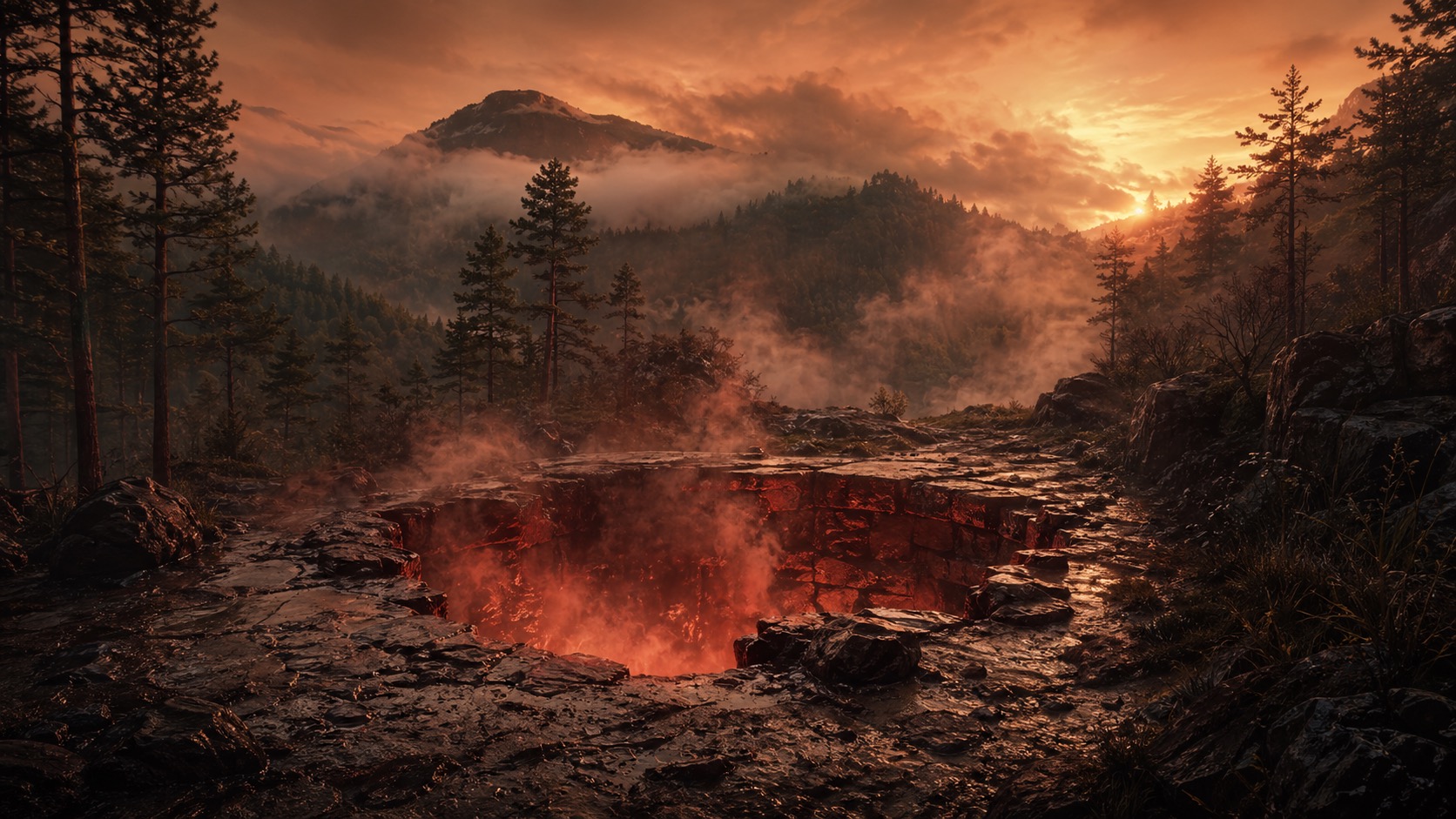
Nepantla, Estado de México, sits within Volcano zone. That setting matters to the legend because the built environment, the local weather, and the sensory character of the place give the story a believable stage. Sound, mist, architecture, old roads, vegetation, and topography all help explain why this tale continues to feel anchored to a particular landscape rather than floating free of it.
Cultural reading
Cultural reading
Culturally, the legend treats literacy, contemplation, and architecture as living residues rather than dead heritage. What remains is not just a building or an object, but a mode of thinking that still alters the atmosphere around it.