Full legend
The story
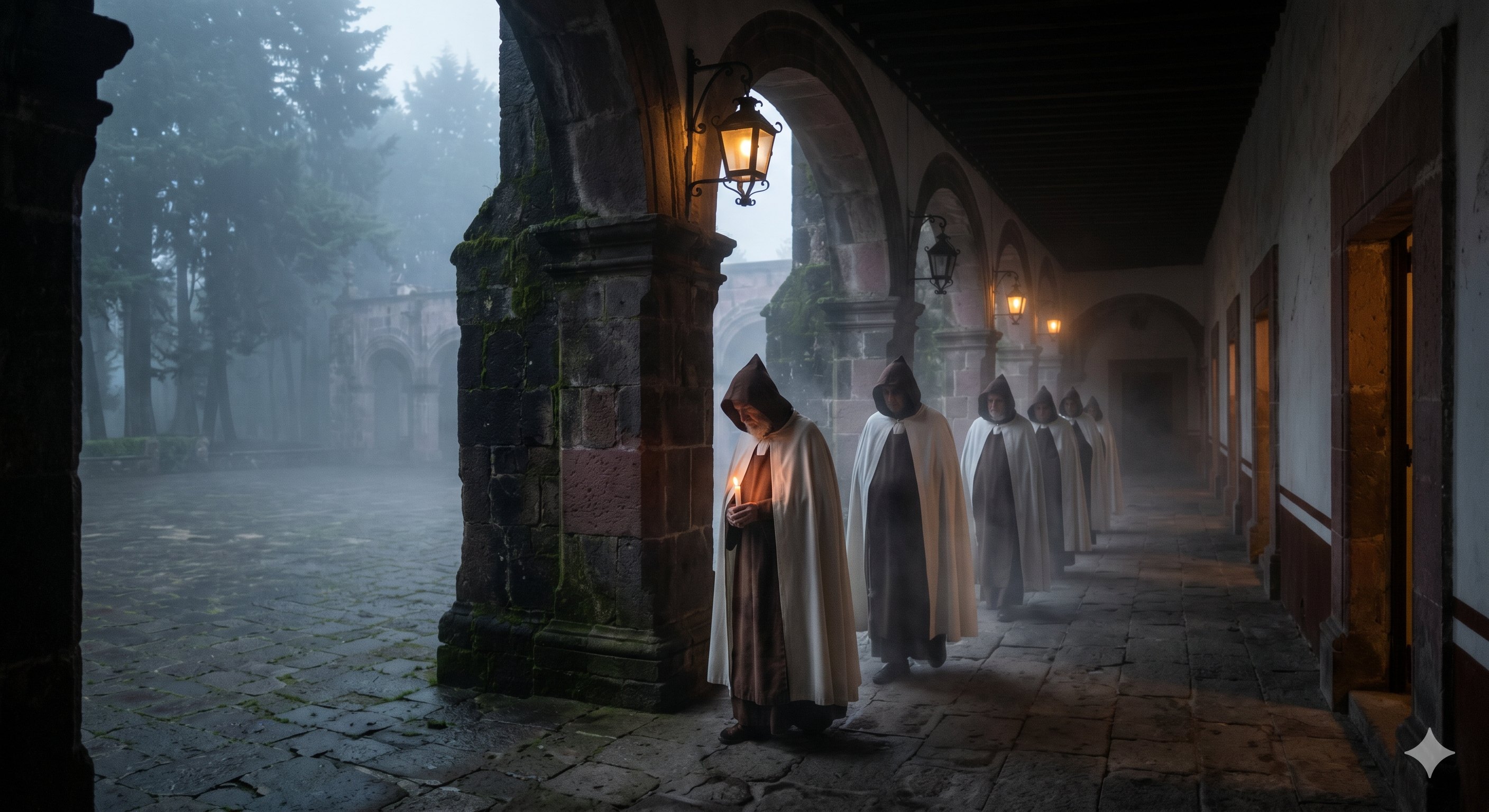
On the majestic Tepeyac Hill, long before the Gustavo A. Madero borough's asphalt surrounded its sacred slopes, a place of absolute devotion existed. The heirs of the oral tradition recount that the legend of Tonantzin: The Mother of Tepeyac manifests not by whim, but when the city itself surrenders to a primal silence. It happens at that precise moment before dawn, when the thick, cold mist of the ancient lake ascends to reclaim the territory, blurring the boundaries of modernity to recognize whoever travels along its ancient paths with respect.
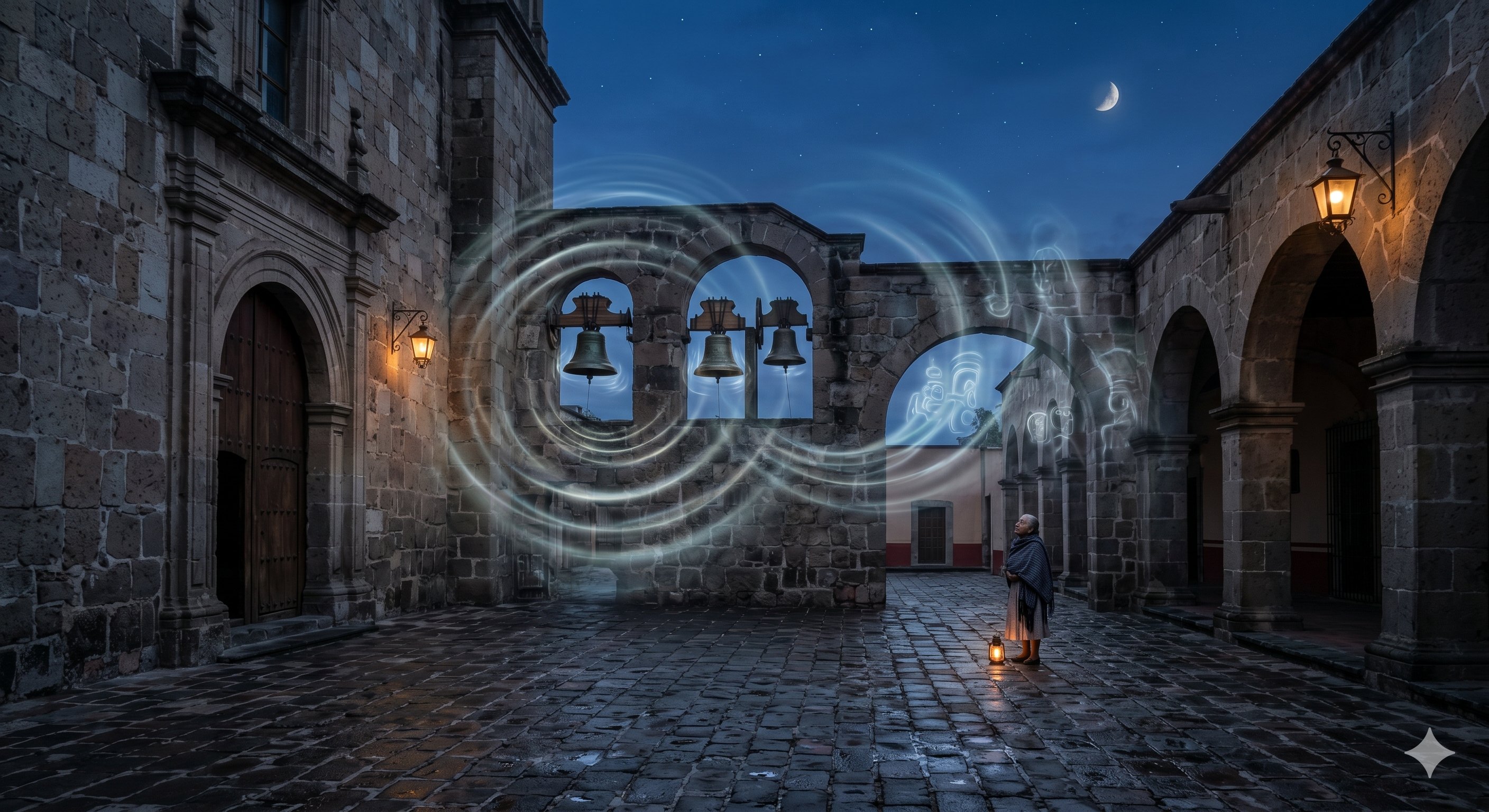
Her appearance does not arrive with the clamor of conventional terror or harrowing wails. The announcement is subtle, almost lyrical, a sensory memory sprouting directly from the stone: it begins with the trill of precious birds that no longer inhabit the valley, and with the sweet, impossible aroma of flowers that seem to sprout from the bare rock, just when the humidity moistens the volcanic stone, as if the territory opens a sonorous and olfactory crack towards the sacred that remained pending.
The neighbors who guard the memory of the GAM assure that this presence does not seek to frighten for mere pleasure. It allows itself to be felt so that no one forgets what was there before: the hill as a living being, its ancient devotions, its sorrows, and its sacred steps. The legend does not live anywhere; it demands this exact geography, needing that hill, that specific corner, that square, that market, or that temple to have form and meaning. The signal does not arrive to show off as a folkloric spectacle; it arrives as a subtle spiritual correction for whoever travels while confusing true devotion with an empty and inert custom. It is the territory itself that speaks through its aromas and vibrations before any human explanation dares to intervene.
Oral memory
Origin of the story
The Ancient Mother of Tepeyac grows from a popular reading of Cerro del Tepeyac. The cited source anchors the site and its historical context; the legend uses that ground to tell what the neighborhood imagines, fears, or preserves.
Territory
Territory and atmosphere
The story is set at Parque Nacional El Tepeyac. That point is not decorative: the street, plaza, market, church, canal, or hill explains why the apparition is told there and not elsewhere in Gustavo A. Madero.
Cultural reading
Cultural reading
The key to the tale is a ceremonial hill where devotion changes name without leaving the place. As an urban and neighborhood legend, it turns a territorial detail into warning, memory, or wonder so the local past can keep speaking inside the present city.