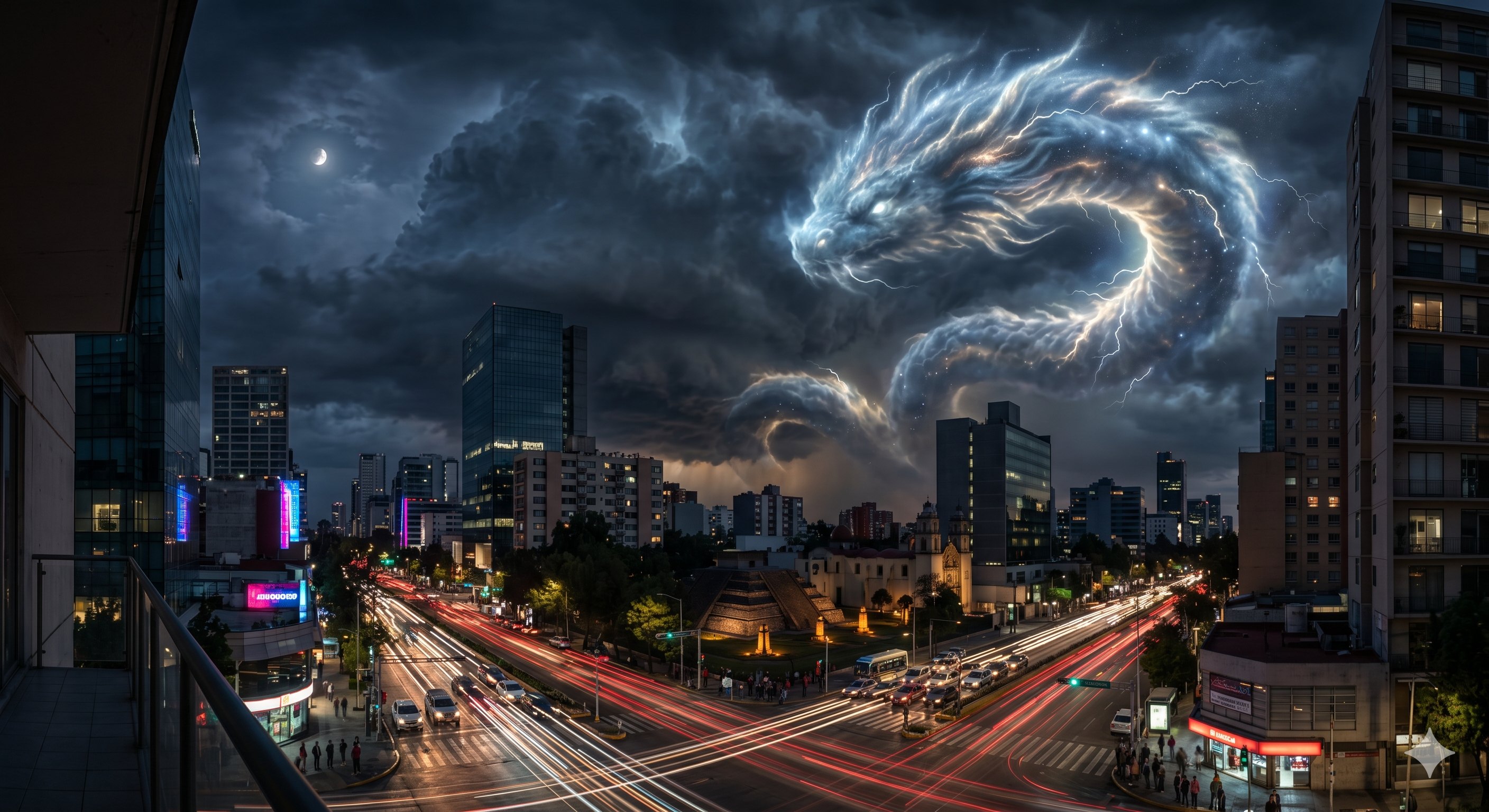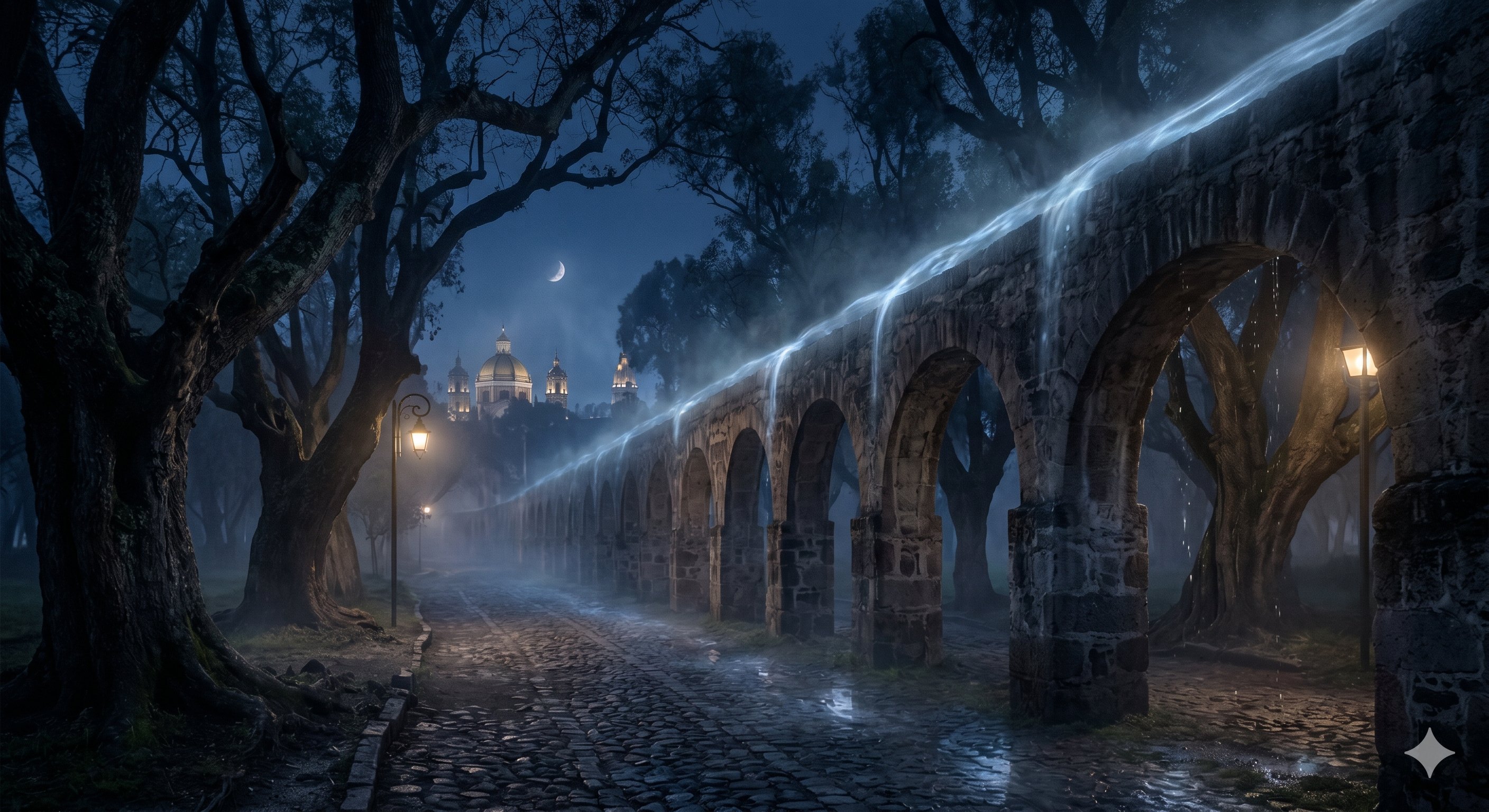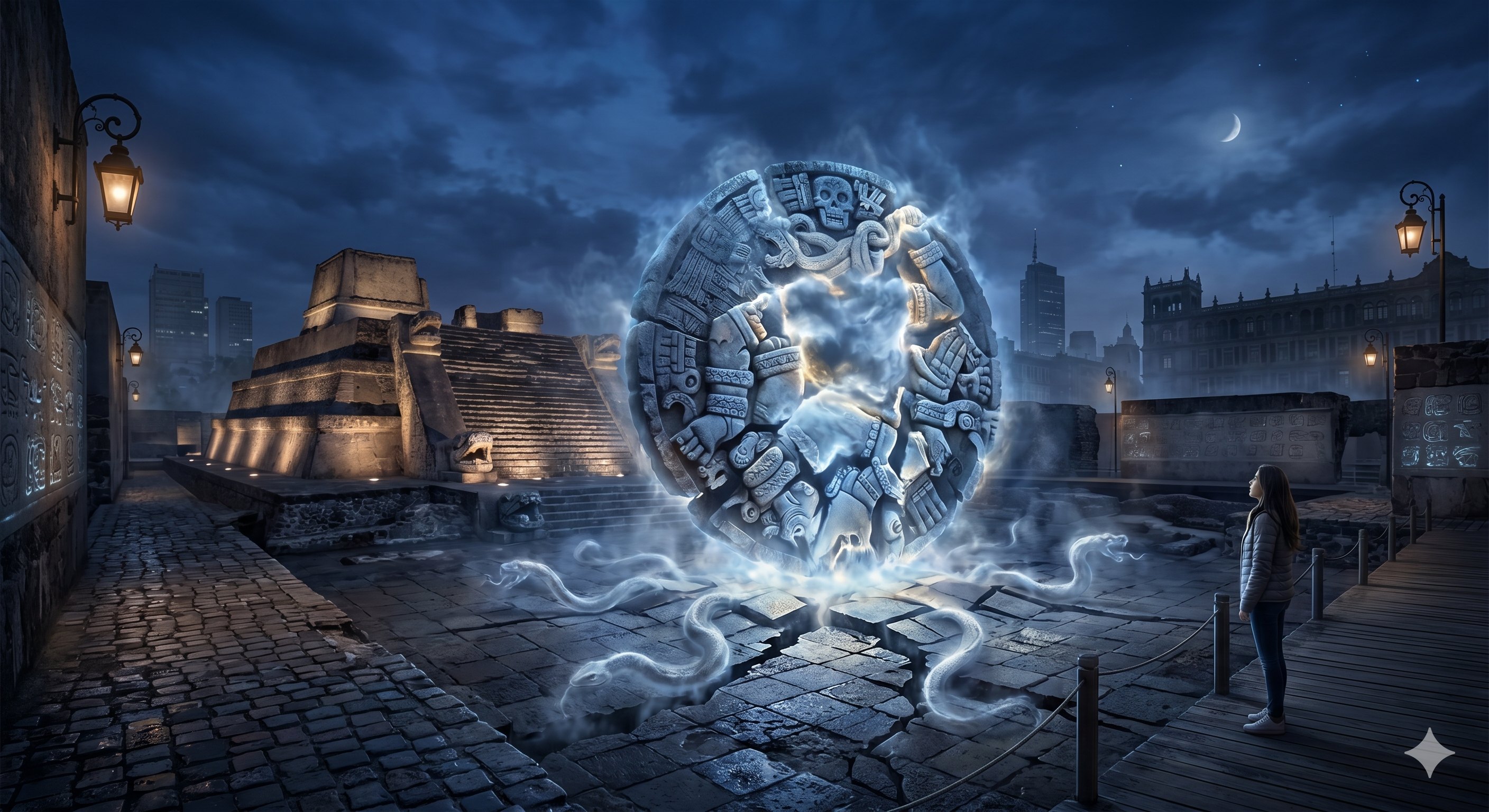
Full legend
The story
In the ancient heart of Mexico City, where the streets of Seminario and Justo Sierra meet at Seminario 8, within the Cuauhtémoc borough, the asphalt seems to give way under the tectonic pressure of memory. Local chroniclers and neighbors who have inhabited the Centro Histórico for generations say that the legend of "The Broken Moon of Templo Mayor" manifests only when the site enters that "strange hour": that brief and uncertain interval at dusk or dawn, when the uproar of cars ceases, modern bustling lowers its guard, and the neighborhood seems to contract to regain its ancient breath and recognize whoever walks its stones.
The apparition does not follow conventional horror patterns; it does not burst in with harrowing wails or nightmare visions. It begins subtly, with a heaviness in the air and the sensation of an ancient gaze springing directly from the cracks of the archaeological excavation, a site that, beyond science, is seen as a presage and a living memory. It is as if the street opened a sonorous and olfactory crack toward the fateful February 21, 1978, echoing the fortuitous discovery by workers of the Compañía de Luz y Fuerza del Centro, filtering what remained pending from the colonial and Mexica past through the modern world.
The elders assure that these presences do not seek to terrify out of malice. Their purpose is to fight oblivion, acting as a sensory bond so that no one ignores what was there before the Centro Histórico: México-Tenochtitlán, its profound devotions, its forgotten sorrows, its vanished trades, and the rhythmic steps of the warriors and priests who forged this sacred territory over the lake. Therefore, the phenomenon is inseparable from its exact geography; it needs that specific corner, the stone of the temple, or the shadow of the Metropolitan Cathedral to take body and meaning. The signal does not arrive to show off as a folkloric spectacle; it arrives as a subtle spiritual correction for whoever travels through the sacrosanct precinct confusing true devotion with an empty and inert custom. The territory speaks through its aromas and vibrations before written history attempts to explain it.
Oral memory
Origin of the story
The Broken Moon of the Templo Mayor grows from a popular reading of México-Tenochtitlán. The cited source anchors the site and its historical context; the legend uses that ground to tell what the neighborhood imagines, fears, or preserves.
Territory
Territory and atmosphere
The story is set at Seminario 8, Centro Histórico. That point is not decorative: the street, plaza, market, church, canal, or hill explains why the apparition is told there and not elsewhere in Cuauhtémoc.
Cultural reading
Cultural reading
The key to the tale is a fragmented moon goddess turning excavation into omen and memory. As an urban and neighborhood legend, it turns a territorial detail into warning, memory, or wonder so the local past can keep speaking inside the present city.