Full legend
The story
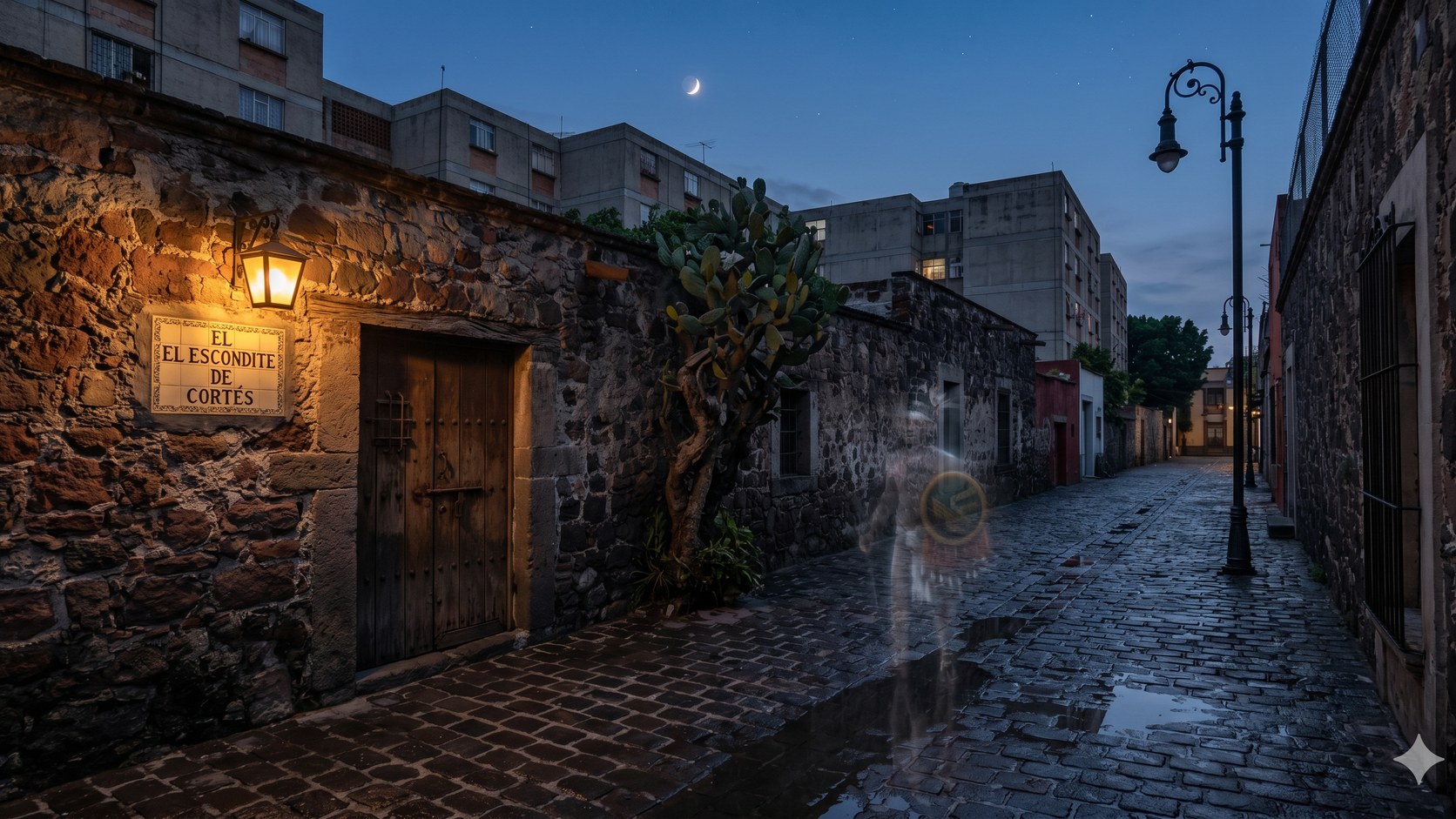
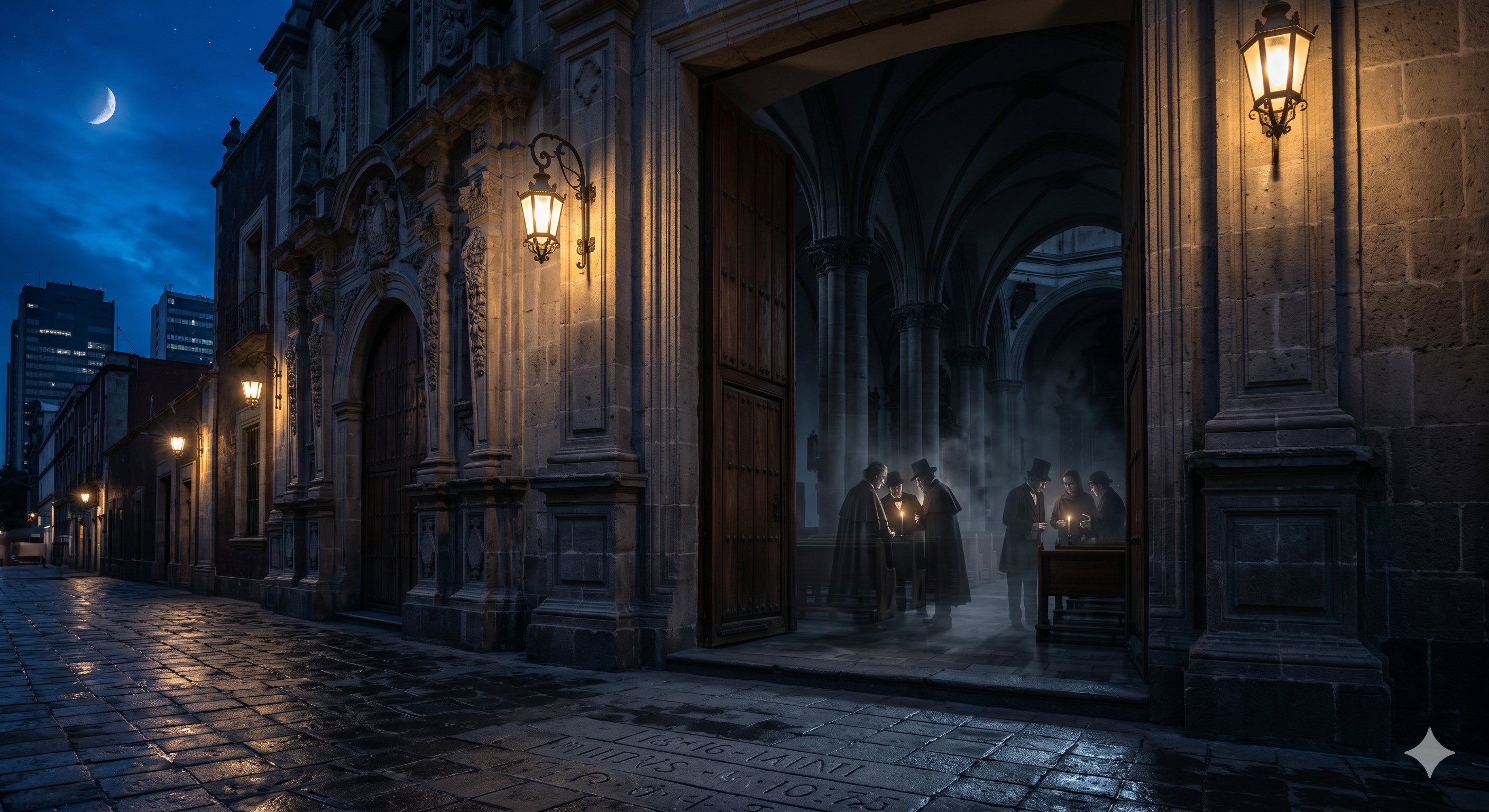
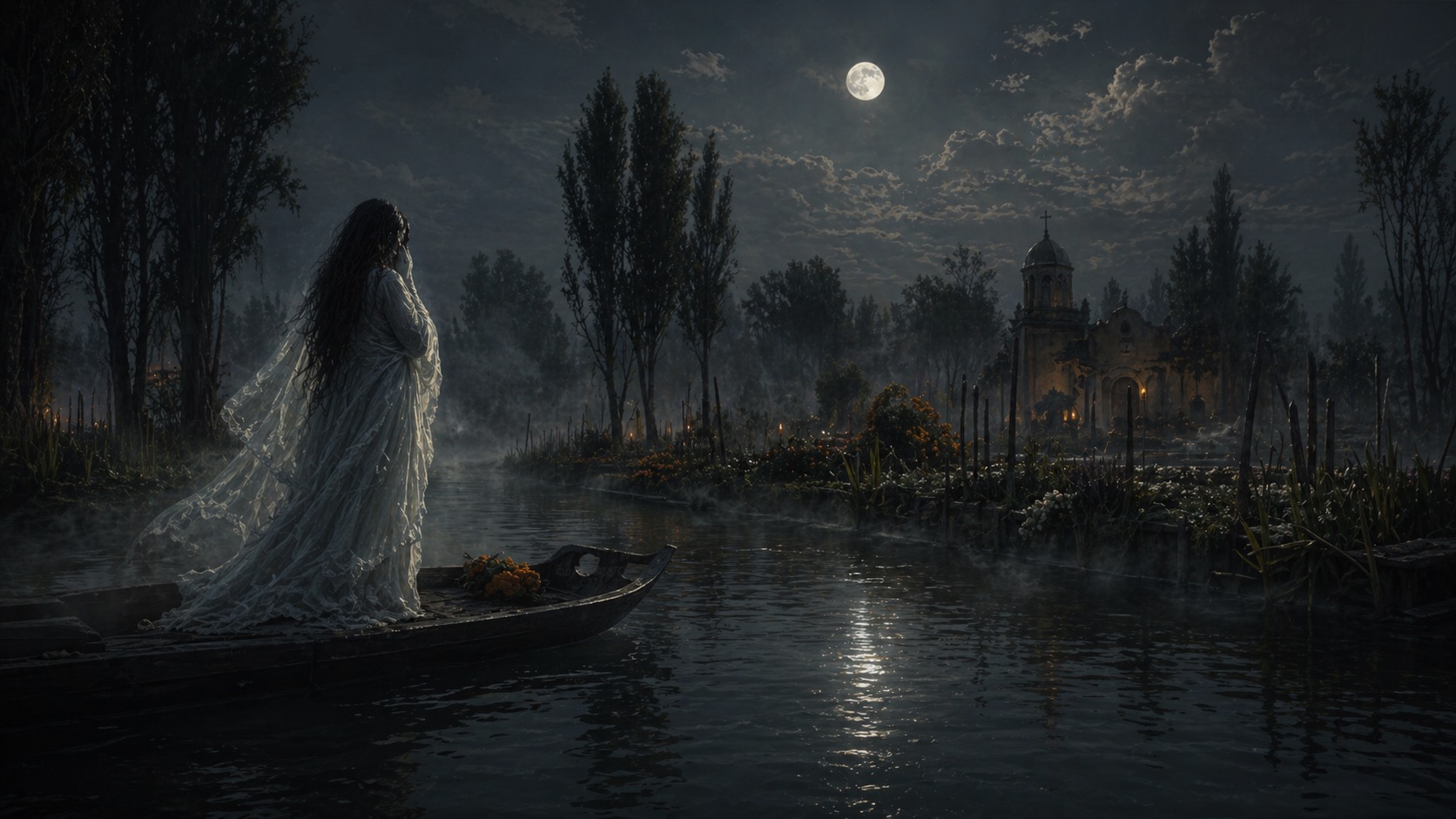
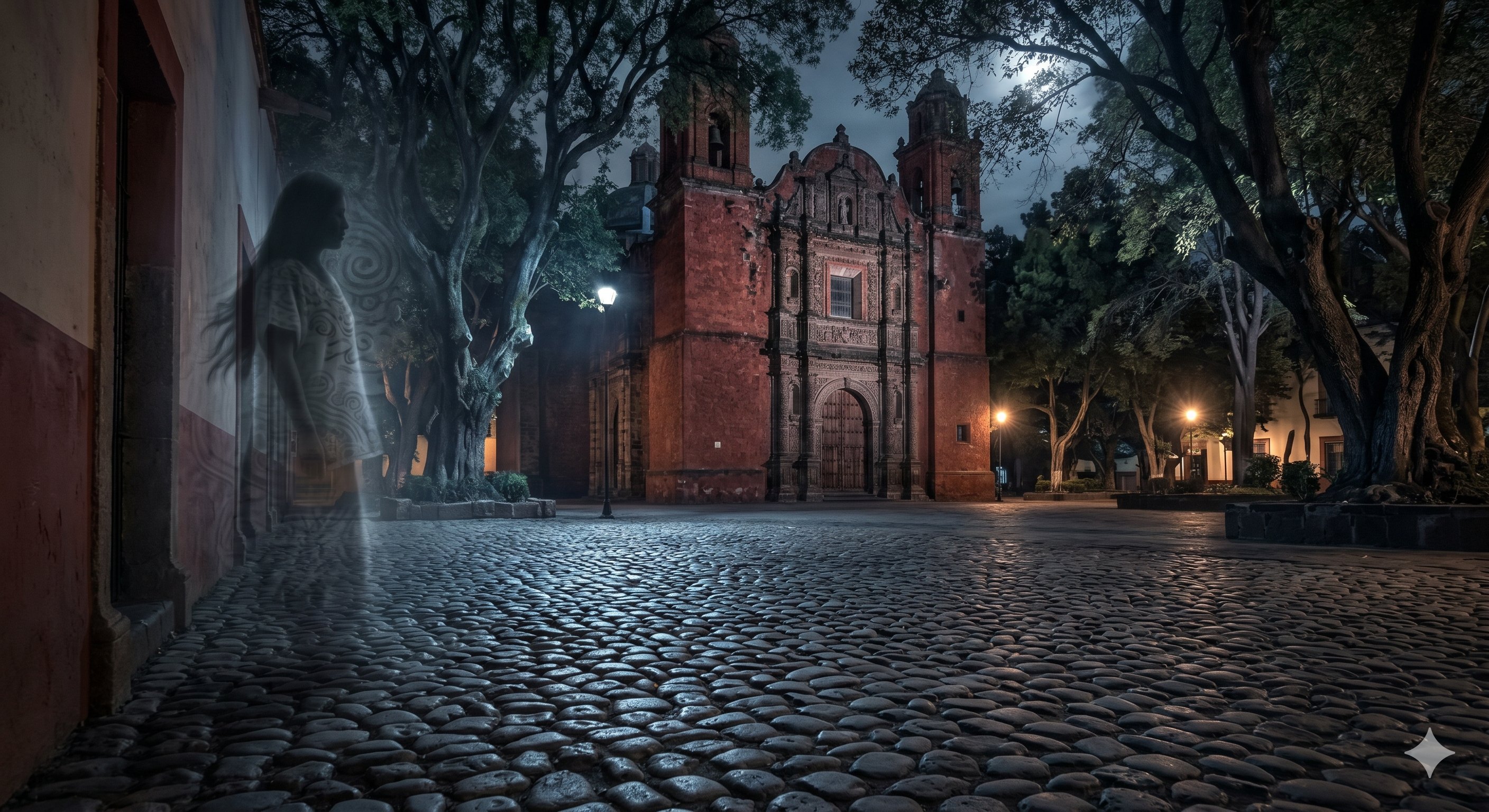
The oldest voices of Coyoacán recount that in the Plaza de la Conchita, where history seems to have been suspended between walls of volcanic stone and centuries-old trees, a unique phenomenon occurs. They say that Malinche's Shadow in La Conchita makes its appearance only when the location is immersed in that "strange hour": that brief and uncertain interval at dusk or early morning when the modern hustle lowers its guard, the neighborhood reclaims its ancestral breath, and seems to recognize, with a reverent shiver, whoever dares to walk upon its stones.
This apparition does not announce itself with harrowing screams or rattling chains, like other figures of folklore. It begins subtly, almost imperceptibly: with a sudden heaviness in the air and the overwhelming sensation of a female presence. This energy is deeply linked to the first houses of Hernán Cortés, to the very foundations of the chapel that today crowns the plaza, and to the stifled murmur of a city barely being born amidst the blood of the clash of two worlds. It is as if the alleyway opens a slit toward what remains unfinished in the territory's memory.
The residents of Coyoacán, guardians of this oral tradition, assure that the appearance of Malinche (or Malintzin) does not seek to scare out of pure malice. She is the "Language" of the Conquest, the mother of mestizaje, a complex figure caught between betrayal and survival. She makes herself felt to fight oblivion, acting as a sensory anchor to foundational Coyoacán, the place that was the first capital of New Spain before Mexico-Tenochtitlan was rebuilt. Her shadow evokes the deep devotions, the stifled sorrows, the ancient trades, and the forgotten footsteps that cemented this corner. This is why the legend demands this exact geography; it needs that specific corner, that precise square, that stone in the La Conchita temple to have body and meaning. The place's memory does not allow itself to be fully archived; it always returns as a shadow, a bell, a paper, a stone, or a repeated name that the wind refuses to silence.
Oral memory
Origin of the story
Malinche's Shadow in La Conchita grows from a popular reading of Coyoacán fundacional. The cited source anchors the site and its historical context; the legend uses that ground to tell what the neighborhood imagines, fears, or preserves.
Territory
Territory and atmosphere
The story is set at Plaza de la Conchita. That point is not decorative: the street, plaza, market, church, canal, or hill explains why the apparition is told there and not elsewhere in Coyoacán.
Cultural reading
Cultural reading
The key to the tale is a female presence tied to Cortes' first houses and the rumor of a city being born. As an urban and neighborhood legend, it turns a territorial detail into warning, memory, or wonder so the local past can keep speaking inside the present city.