Full legend
The story
Around the ancient Monastery of San Mateo Churubusco, now the National Museum of Interventions in Coyoacán, the weight of history hangs heavy in the air, especially as night falls. Local chroniclers and residents who have lived in the area for generations whisper that this site is the epicenter of one of Mexico City's most solemn legends: The Defenders who Haunt Churubusco.
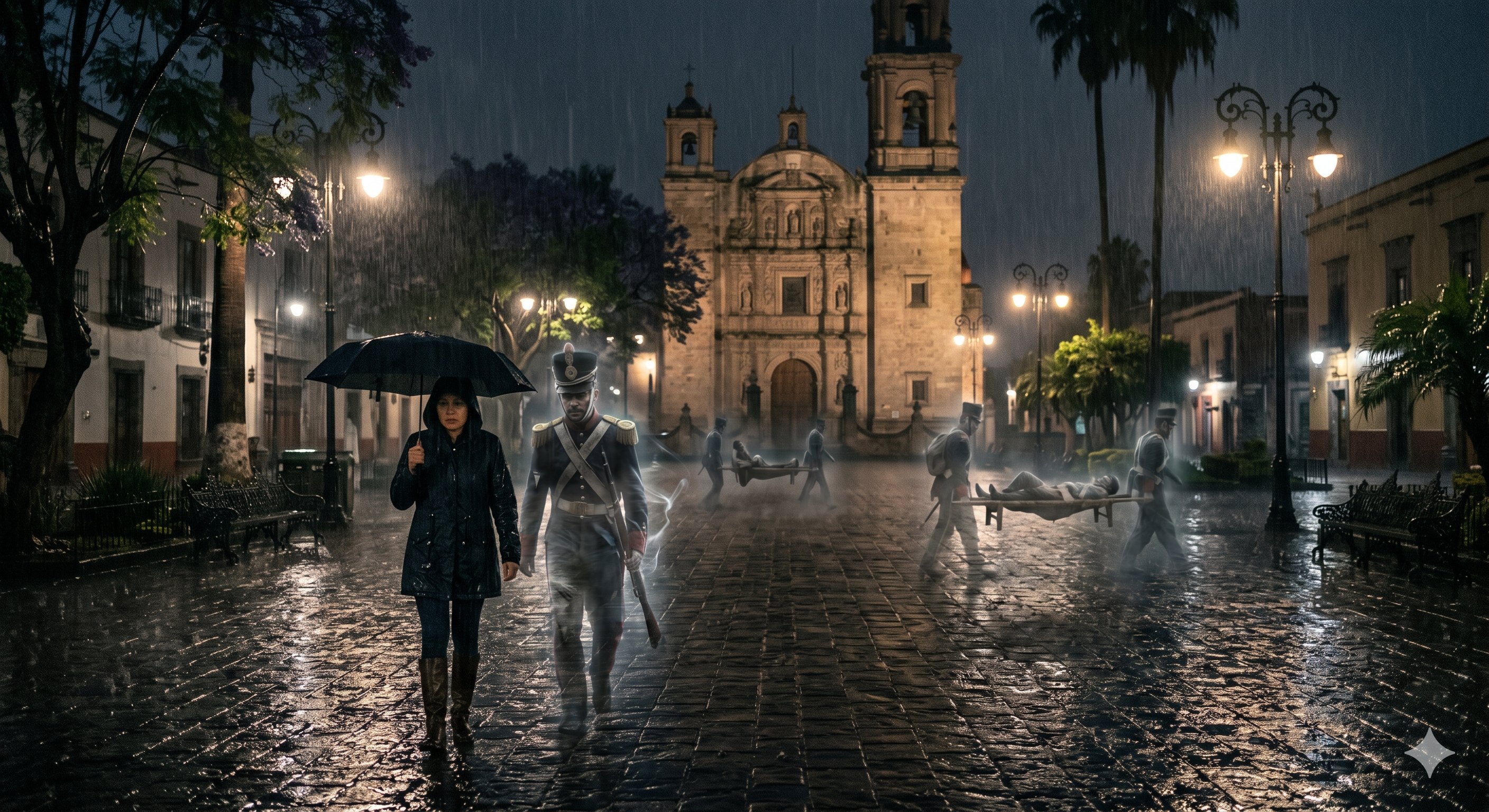
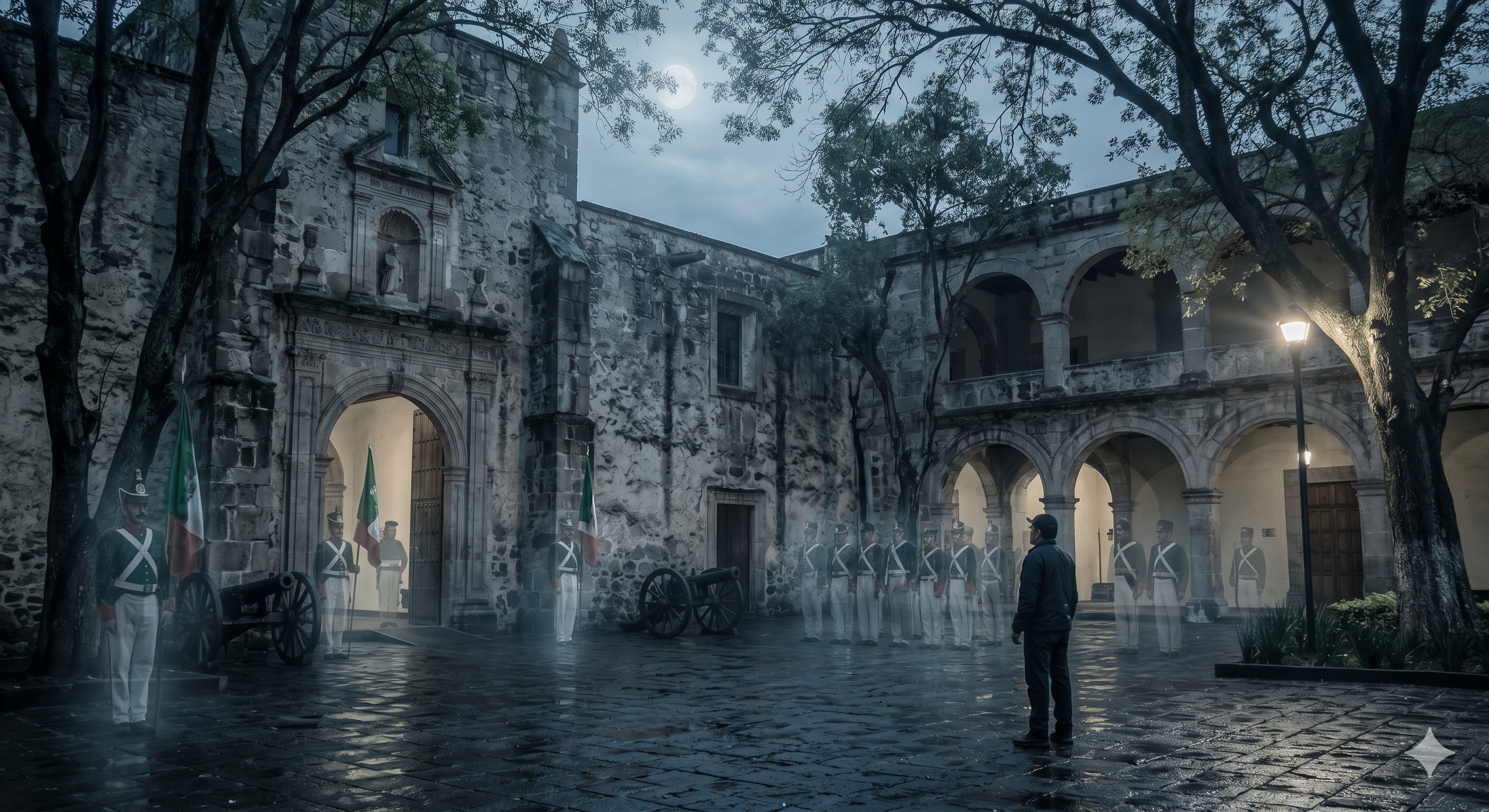
The haunting does not follow the patterns of conventional horror; it does not seek to terrify with screams or harrowing wails. It manifests subtly during that "strange hour" of dusk or early morning, when the urban clamor subsides and Coyoacán seems to reclaim its ancient breath. The trigger is often rain or environmental humidity that soaks the ancient stone walls and the cannons guarding the entrance of the former convent. It is then that the wet stone seems to act as a portal back to the fateful August 20, 1847.
Those who have walked by at those moments describe the disquieting vision of ghost soldiers formed in silent guard near the monastery walls. They wear the tattered uniforms of the 19th-century Mexican infantry, and some claim to see the unmistakable figures of members of the heroic Saint Patrick's Battalion (San Patricios). There is no sound of gunfire or battle cries; only the phantasmal gleam of bayonets under the moon and the subtle yet unmistakable scent of damp gunpowder filling the air.
Oral tradition asserts that these presences are not malevolent. They are eternal sentinels who refuse to abandon their post. Their purpose is to guard the memory of the ancient neighborhood of San Mateo Churubusco and to ensure that no one forgets what happened there: the heroic yet tragic defense against the U.S. invasion, the Franciscan devotions that once filled the convent, and the footsteps of those who gave their lives for their country. It is a palpable reminder that the history of the place needs that corner, that plaza, and that temple to keep its form.
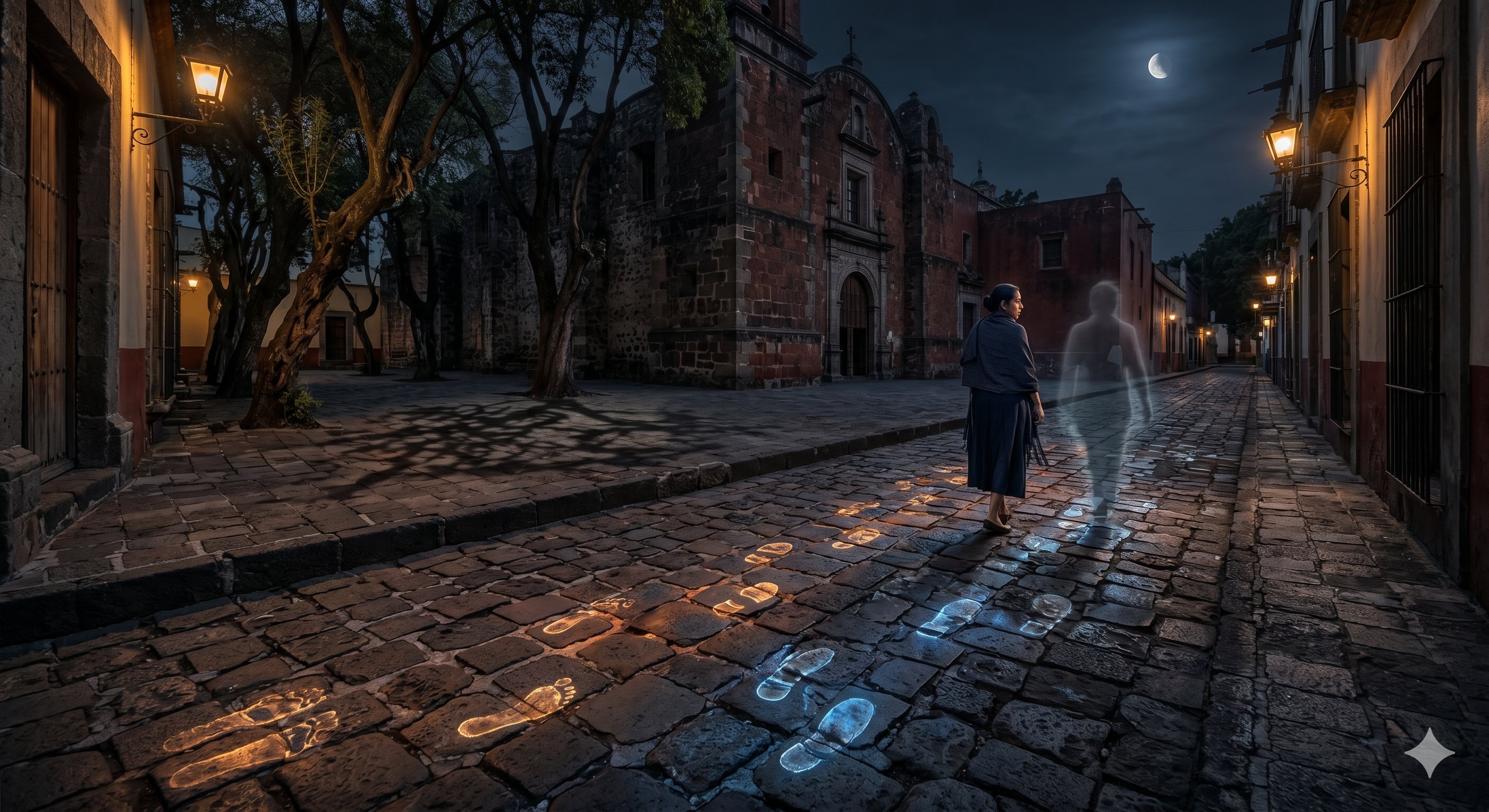
The solitary walker crossing the Monument to the Defenders may feel their stroll is ordinary, until they notice a bone-chilling detail: the rhythmic sound of an extra footstep, invisible and disembodied, accompanying their stride. A sudden chill runs down their spine, silently reminding them that in Churubusco, not all who travel are still alive.
Oral memory
Origin of the story
The Defenders Who Haunt Churubusco grows from a popular reading of San Mateo Churubusco. The cited source anchors the site and its historical context; the legend uses that ground to tell what the neighborhood imagines, fears, or preserves.
Territory
Territory and atmosphere
The story is set at Monumento a los Defensores de Churubusco. That point is not decorative: the street, plaza, market, church, canal, or hill explains why the apparition is told there and not elsewhere in Coyoacán.
Cultural reading
Cultural reading
The key to the tale is soldiers still standing guard near the old monastery when the stone grows damp. As an urban and neighborhood legend, it turns a territorial detail into warning, memory, or wonder so the local past can keep speaking inside the present city.