Full legend
The story
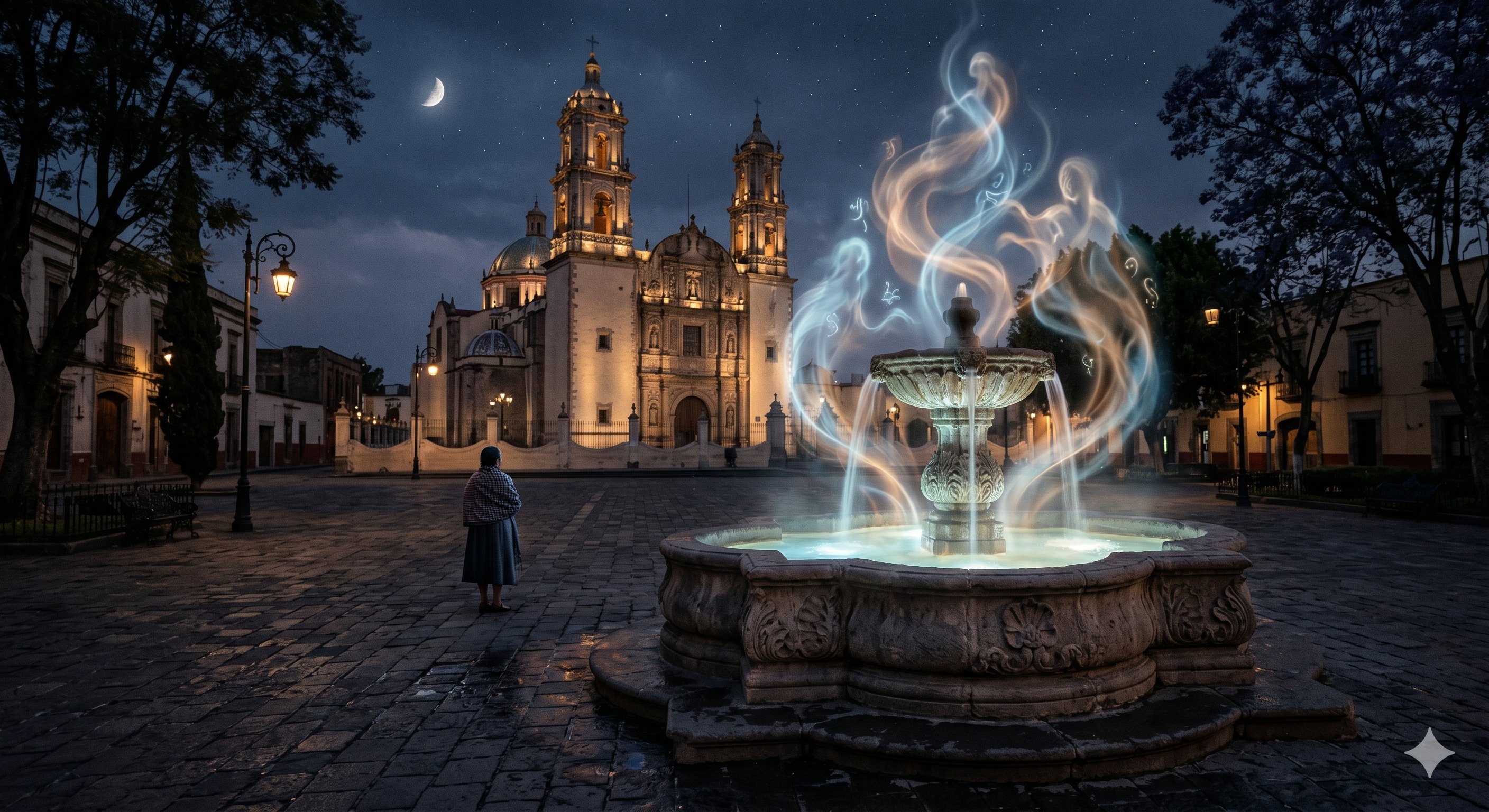
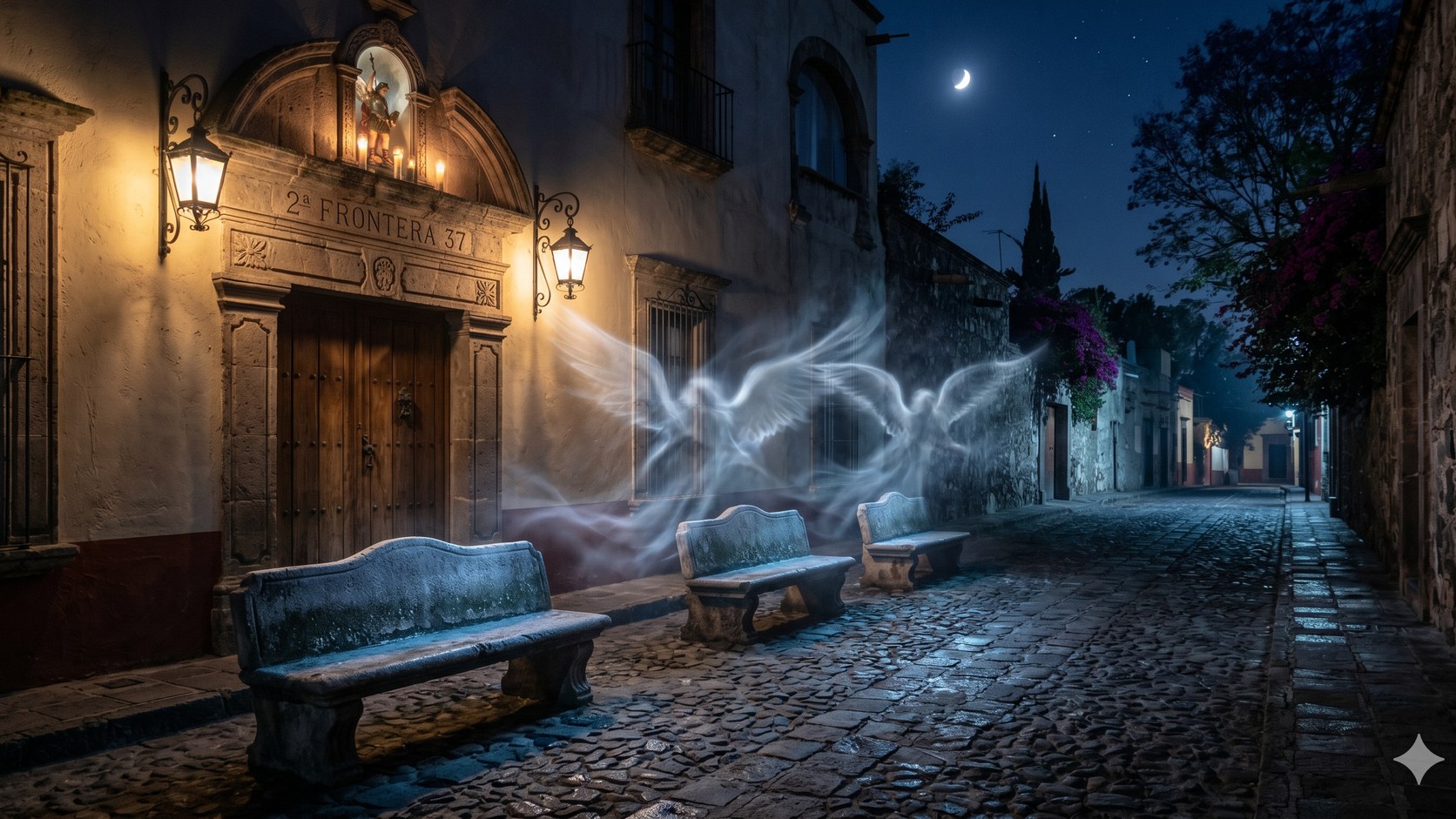
In the heart of San Ángel, Plaza San Jacinto harbors a wound in its memory that refuses to heal. Nighttime wanderers say that the "Invisible Hospital" only emerges when the city gives way to that "strange hour": the moment before dawn when modern clamor dies down, and the cobblestone streets seem to become aware of who walks upon them.
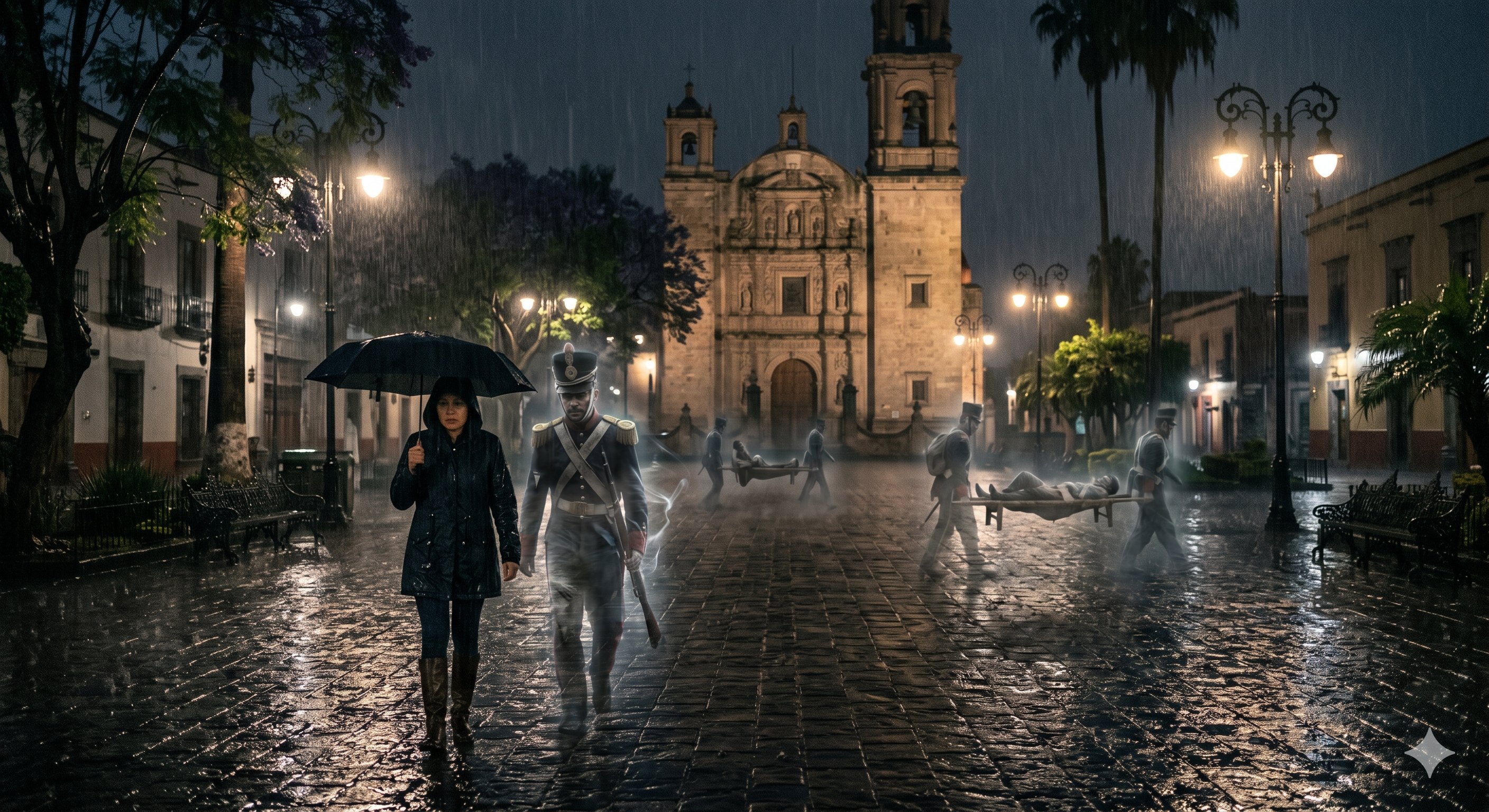
The phenomenon rarely announces itself with loud noises; it prefers to manifest on nights of cold rain. It begins slowly, with the creaking of old wood, the dragging of heavy boots, and the squeak of makeshift stretchers. These are the footsteps and muffled whispers of wounded soldiers that the plaza refuses to forget, as if the wet pavement opens a crack into the tragic war of 1847, echoing the days when the temple served as a blood hospital and the antechamber to the gallows.
Old neighbors claim the apparition does not seek to terrify out of malice. Its presence is an act of resistance against oblivion. It makes itself felt so that no one ignores what was lived there: the devotion and the agony, the duels in defense of the land, and the last breaths taken under the shelter of the atrium. That is why the legend demands this exact geography; it requires the church walls, the dampness of its gardens, and the ancient stone cross to take shape.
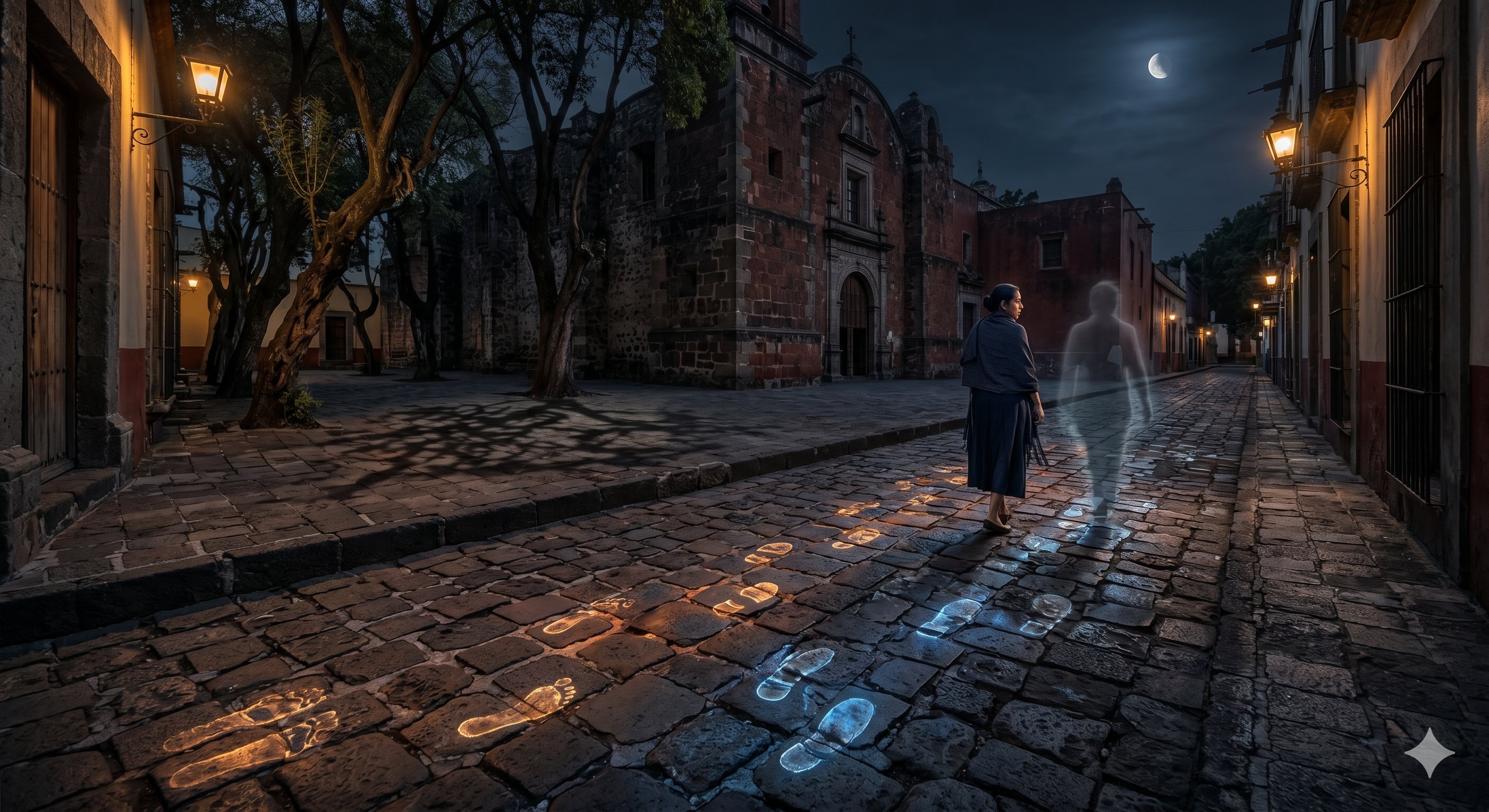
To the passerby, the path may seem ordinary, until the crunch of a foreign footstep suddenly falls into rhythm with their own. A tired breath accompanies them in the mist, reminding them with a chilling shiver that, in this plaza of Álvaro Obregón, not everyone who walks is still alive.
Oral memory
Origin of the story
The Invisible Hospital of San Jacinto grows from a popular reading of San Ángel colonial. The cited source anchors the site and its historical context; the legend uses that ground to tell what the neighborhood imagines, fears, or preserves.
Territory
Territory and atmosphere
The story is set at Plaza San Jacinto. That point is not decorative: the street, plaza, market, church, canal, or hill explains why the apparition is told there and not elsewhere in Álvaro Obregón.
Cultural reading
Cultural reading
The key to the tale is stretchers, footsteps, and wounded soldiers' voices remembered by the square on rainy nights. As an urban and neighborhood legend, it turns a territorial detail into warning, memory, or wonder so the local past can keep speaking inside the present city.