Full legend
The story
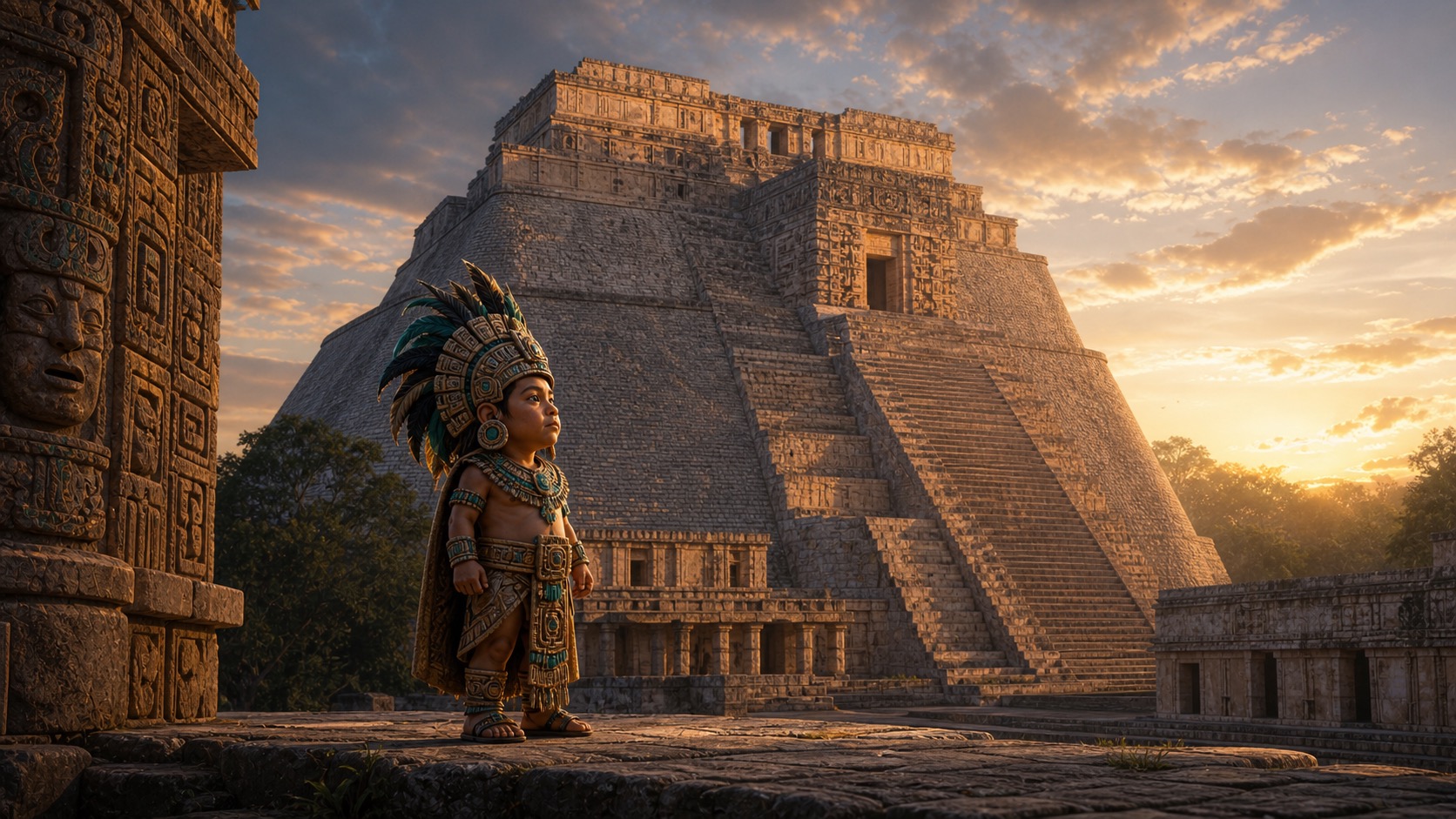
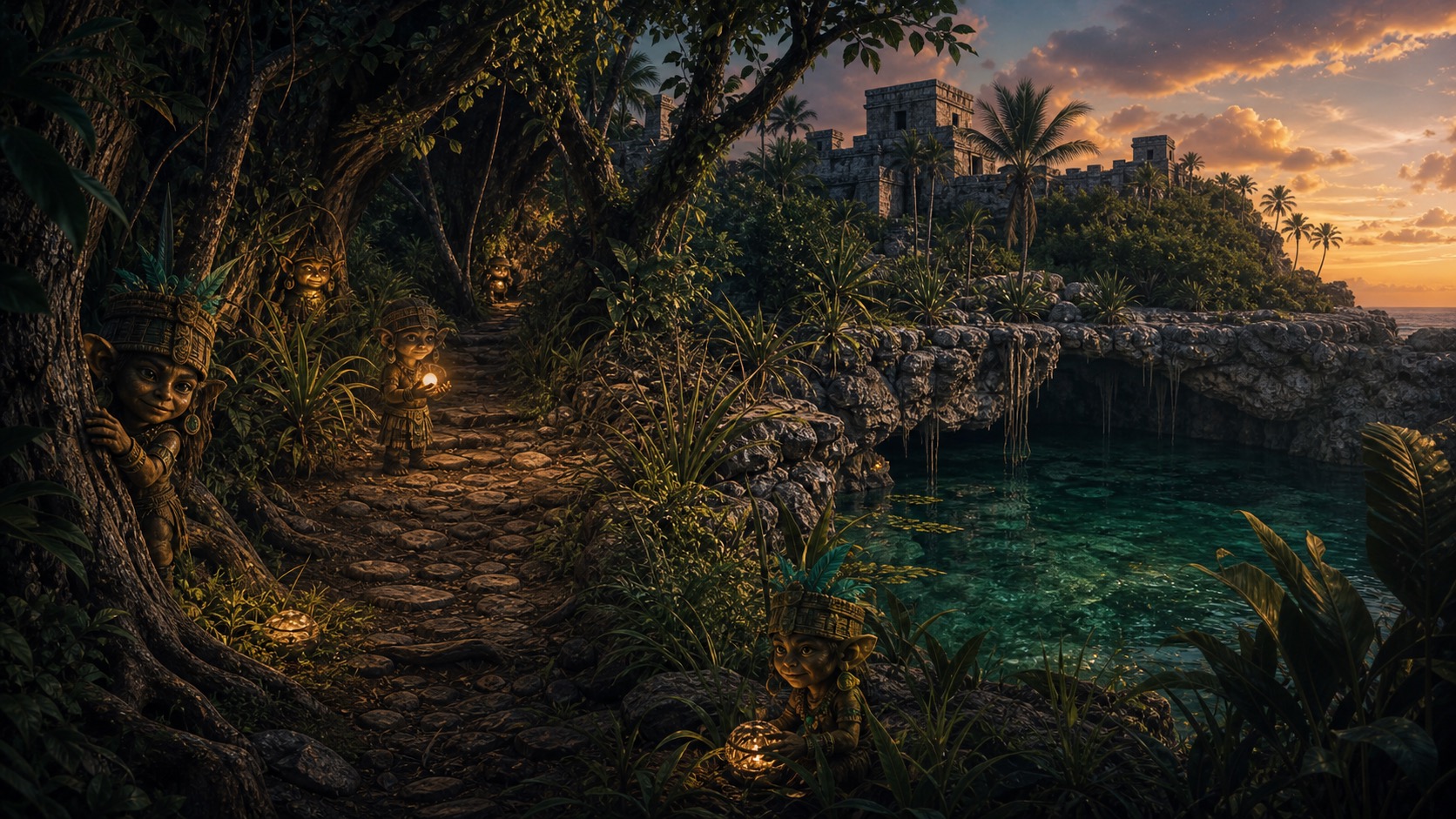
In Tulum, people speak of small guardians who watch over ruins, trails, and cenotes. The aluxes disorient disrespectful visitors, protect those who ask permission, and remind everyone that the jungle is not decorative scenery but a home with invisible owners.
In the landscapes around Tulum, the mountain, the water, or the forest do not function as scenery. They act like witnesses and sometimes like judges, preserving the idea that territory itself can respond when a boundary is crossed.
The Aluxes of Tulum endures because it gives voice to the feeling that the land is never passive. In Maya coast and jungle, warning and wonder still arrive through weather, stone, and water before they arrive through explanation.
Oral memory
Origin of the story
The legend emerges from a territorial reading of the world in which the mountain, the forest, the ravine, or the water preserve their own authority. Oral tradition in Tulum treats the site not as backdrop but as a participant in the event.
Territory
Territory and atmosphere
Tulum, Quintana Roo, sits within Maya coast and jungle. That setting matters to the legend because the built environment, the local weather, and the sensory character of the place give the story a believable stage. Sound, mist, architecture, old roads, vegetation, and topography all help explain why this tale continues to feel anchored to a particular landscape rather than floating free of it.
Cultural reading
Cultural reading
Its cultural reading is environmental as much as symbolic. The legend teaches that land, water, and weather are not neutral resources but forces that demand attention, restraint, and respect.