Full legend
The story
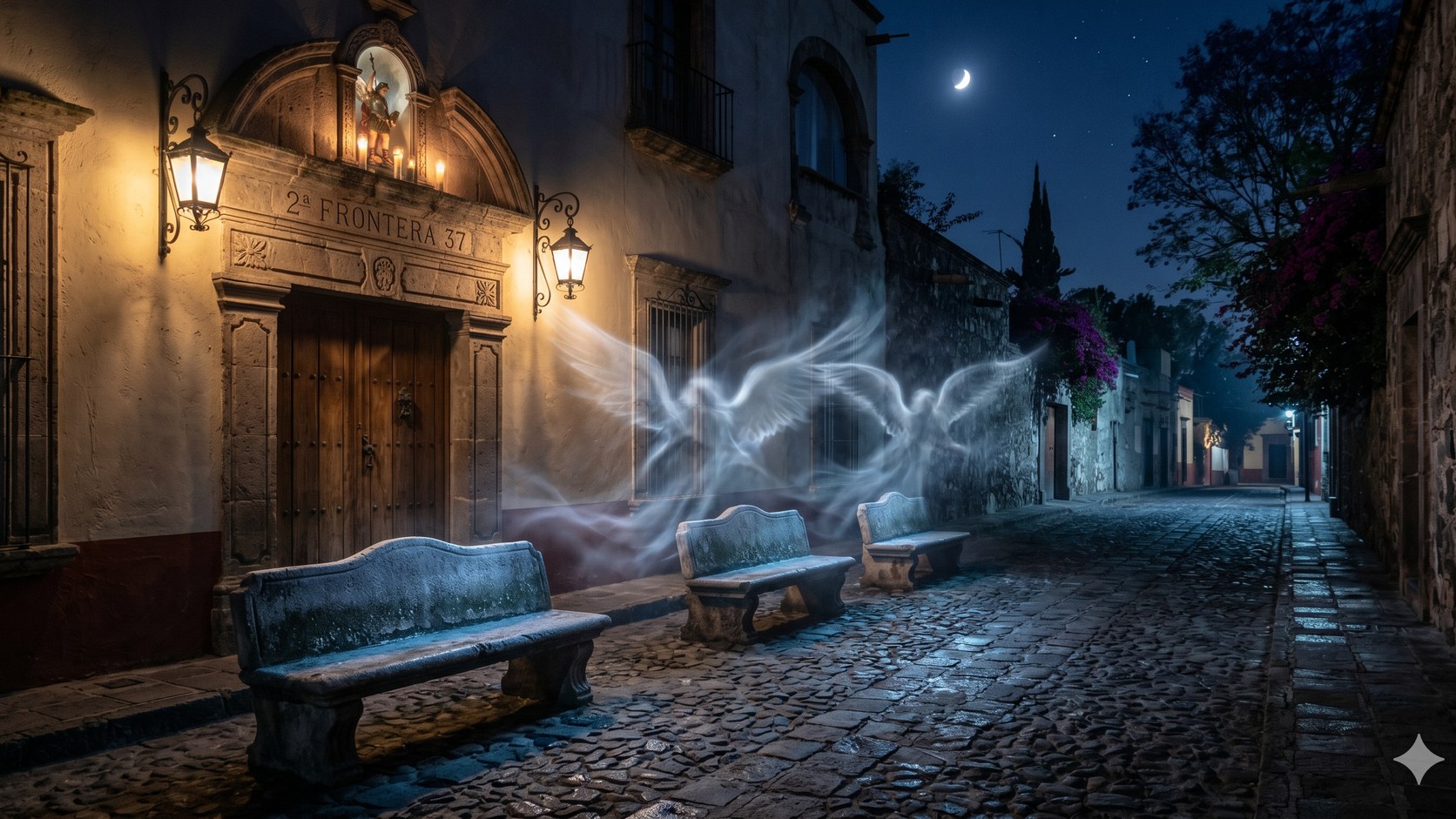
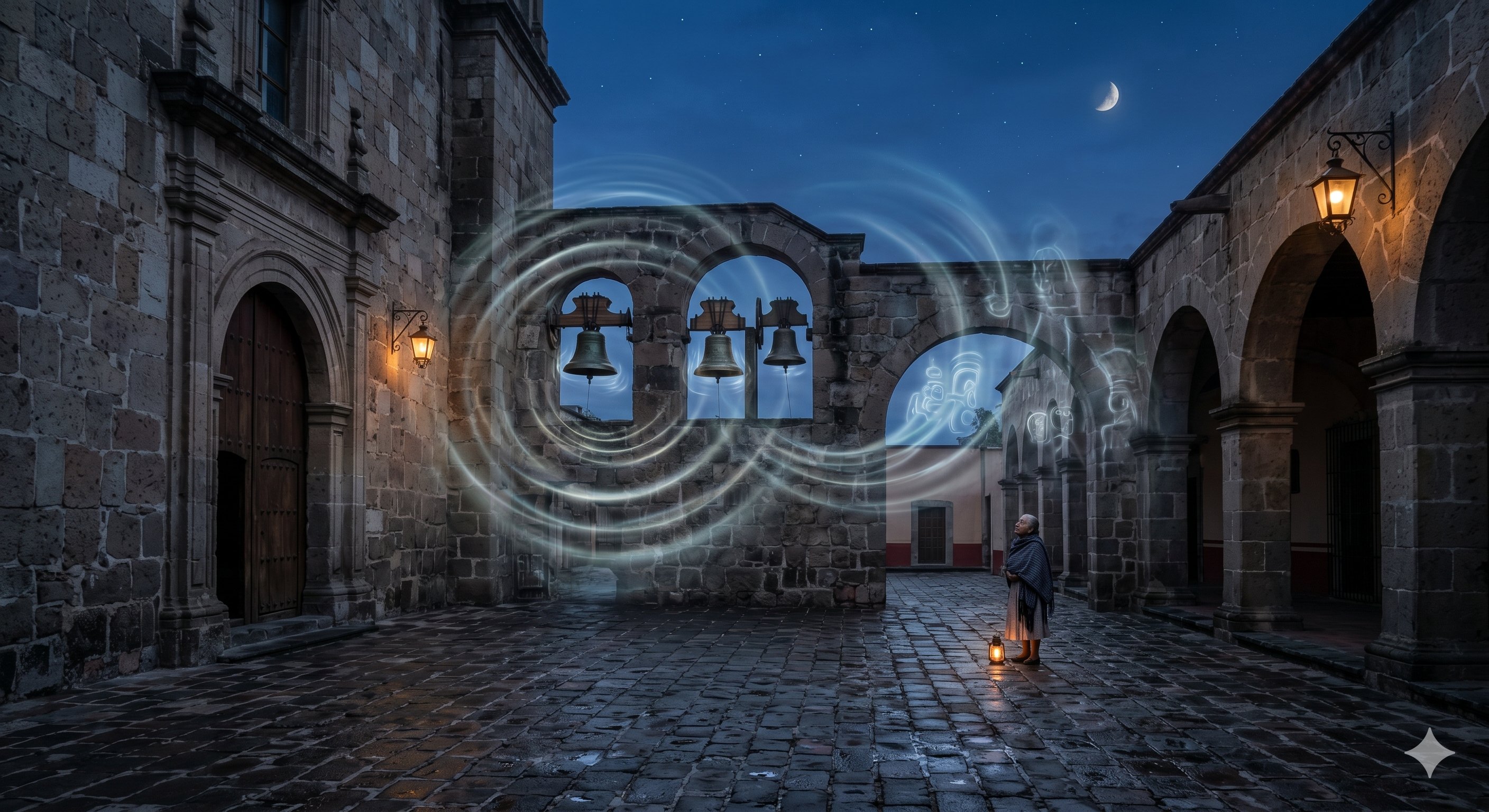
In the depths of the ancient village of San Mateo Tlaltenango, in Cuajimalpa de Morelos, where the borough merges with the centuries-old forest and the mist becomes an accomplice to memory, the asphalt seems to give way under the pressure of centuries. Local chroniclers and neighbors who have inhabited the area for generations recount that the legend of "The Sign of San Juan in Tlaltenango" only takes shape when the site is submerged in that "strange hour": that brief and uncertain interval at dusk or just before dawn, when the noise of civilization lowers its guard and the neighborhood seems to regain its ancient breath to recognize whoever walks its twisted streets.
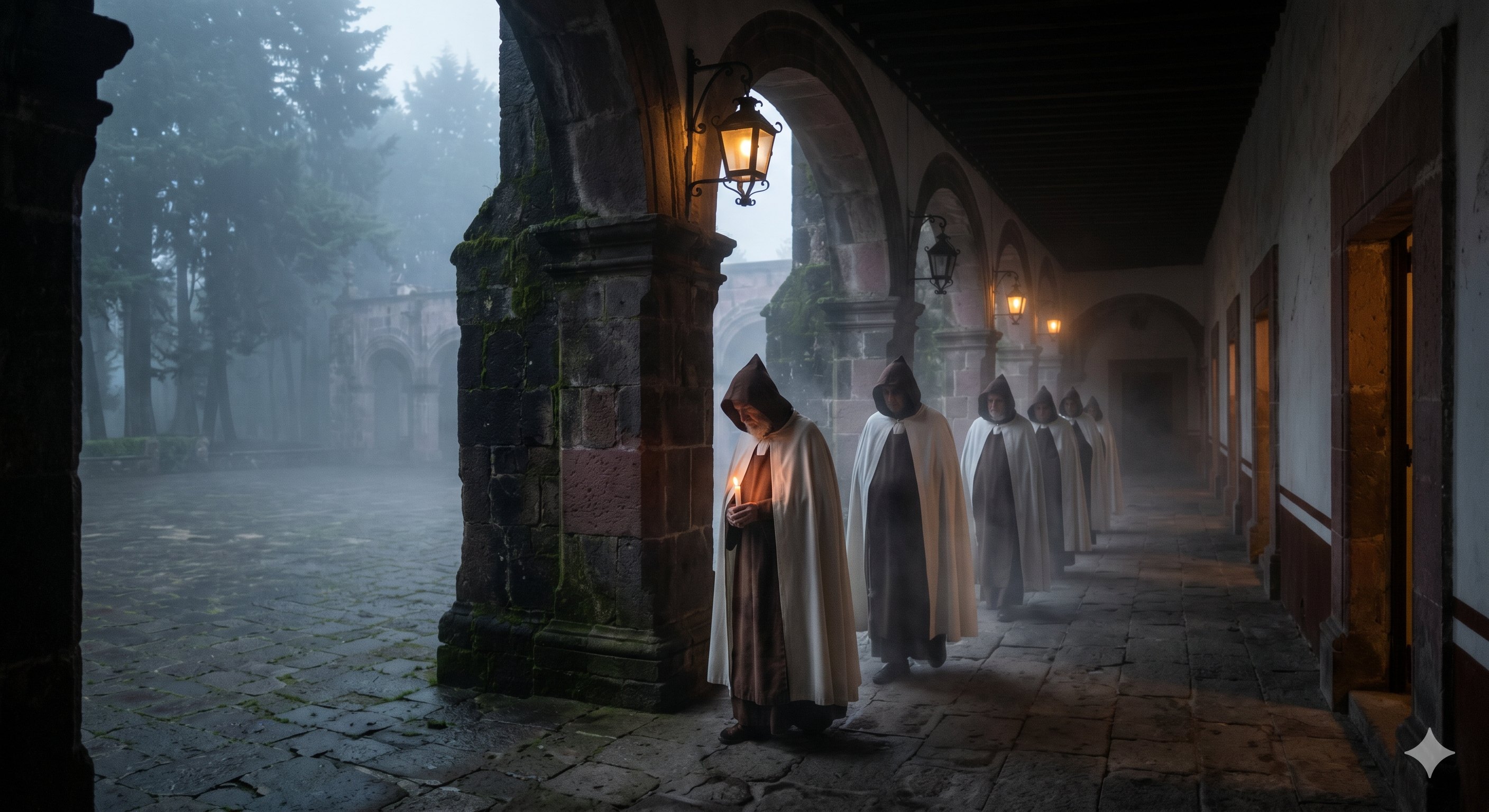
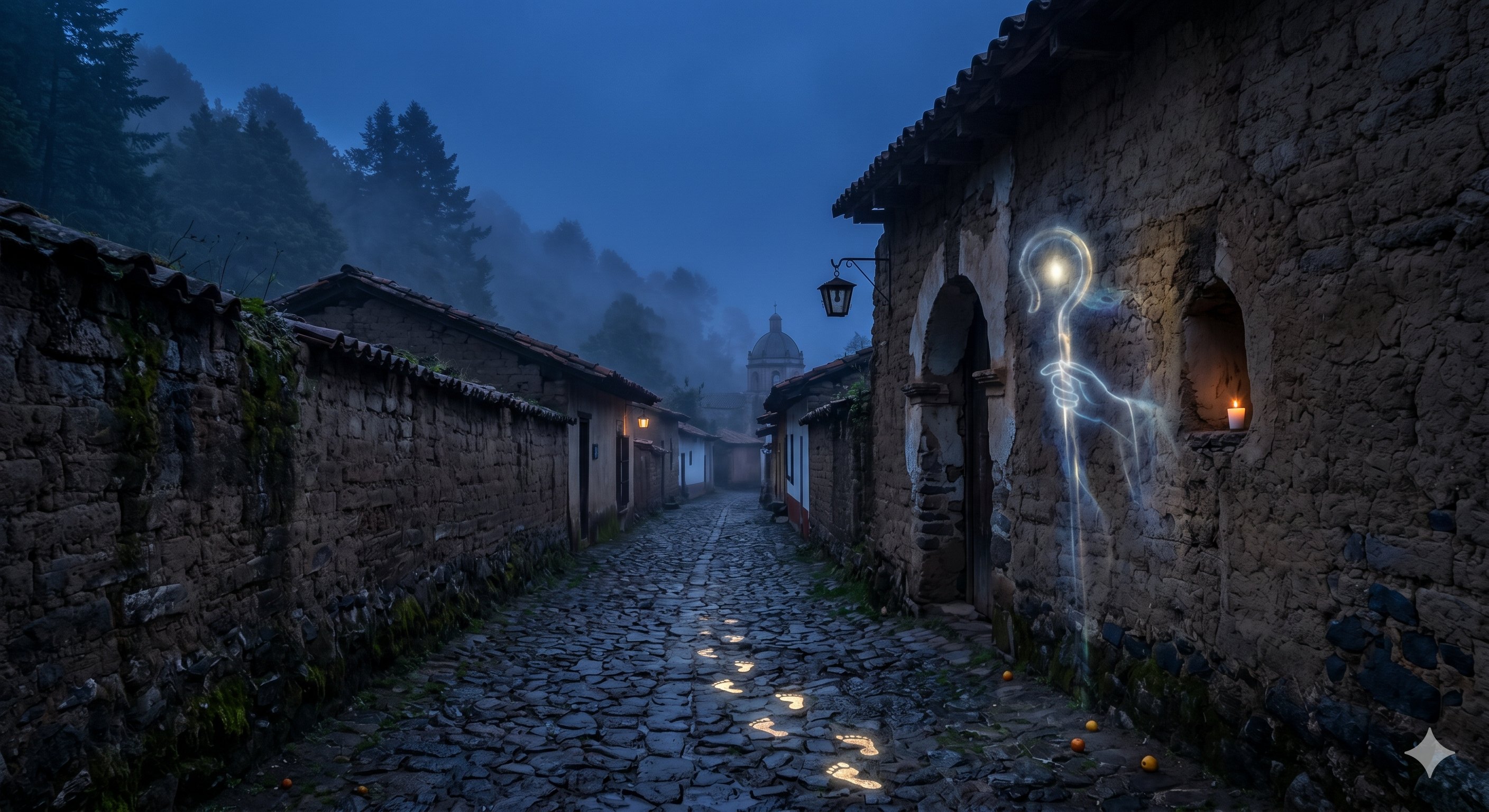
The manifestation is not violent, nor does it announce itself with piercing wails. It begins subtly, with a heaviness in the air and a sudden aroma of old incense and damp sandstone that seems to spring directly from the cracks of the ancient mud and adobe walls that once defined the village's boundaries. It is then that the sign manifests: a pulse of dim light or a shadow that seems to guide along the path. According to local Tepanec and Novohispanic tradition, this sign is an invocation of Saint John the Baptist, who, in Colonial times, guided religious figures —Dominican and Franciscan friars lost in the dense fog among the old mud and adobe walls that defined the town's original boundaries. It is as if the street opens a sonorous and olfactory crack toward what remains unfinished in the territory's memory.
The elders assure that these presences do not seek to frighten for mere pleasure. They make themselves felt as a persistent reminder so that no one forgets what was there before: the mountain villages of Cuajimalpa, a sacred space dedicated to absolute contemplation and farming labor, its deep devotions, its silent sorrows, its daily trades, and its ancient steps marked by the harshness of the climate and faith. Therefore, the legend demands this exact geography; it needs that specific corner, that square, that market, that temple, that hill, or, fundamentally, the cold remains of the adobe walls to take body. The signal does not arrive to show off or as a folkloric spectacle; it arrives as a subtle correction for whoever travels through the sacred precinct confusing true devotion with an empty and inert custom.
Oral memory
Origin of the story
Saint John's Sign in Tlaltenango grows from a popular reading of Pueblos de montana de Cuajimalpa. The cited source anchors the site and its historical context; the legend uses that ground to tell what the neighborhood imagines, fears, or preserves.
Territory
Territory and atmosphere
The story is set at Hidalgo s/n, San Mateo Tlaltenango. That point is not decorative: the street, plaza, market, church, canal, or hill explains why the apparition is told there and not elsewhere in Cuajimalpa de Morelos.
Cultural reading
Cultural reading
The key to the tale is a saint's sign said to have guided friars among earthen walls. As an urban and neighborhood legend, it turns a territorial detail into warning, memory, or wonder so the local past can keep speaking inside the present city.